Note from the Translator
I am simply a practitioner who wishes only to preserve the teachings of Thailand’s noble monks. I have chosen a literal translation so that international readers receive the same essence and full content of every sentence as Thai readers do, without summarizing or adding personal interpretations. Regardless of whether the doctrines herein are "right" or "wrong" in your view, I kindly ask you to use your own wisdom and judgment to reflect upon them.
If you have any suggestions or find any errors where the translation does not match the original Thai text, please let me know. I would be most grateful for your feedback and will update the text to be as accurate as possible. Thank you.
A Spanish version of this article is available here: ESPAÑOL
See? The bats here. If one has studied the Tipitaka. 500 bats were in a cave. Venerable Sāriputta chanted with the group. Chanting away, they were absorbed in listening to the Higher doctrine. Their feet slipped from the rock ceiling. Falling down, they all died. Both females and males died and were reborn as male devas and female devas, entirely. Living in heaven. The benefit of just simply listening. Just simply respecting. Until forgetting oneself. Their feet slipped because they were enchanted.
Welcome to The Abandoned Forest Temple... a tranquil space where the timeless teachings of the forest masters of Thailand are shared with the world in English and Spanish.
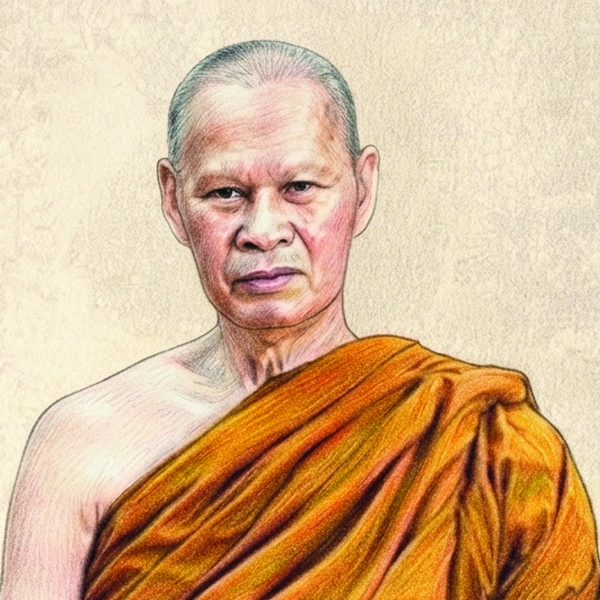
Today, let us come together to listen to the Dhamma teachings of Ajahn Plien Panyapatipo from Wat Aranyawiwake, Chiang Mai Province—a sermon that is both deeply insightful and highly engaging.
Chapter 1: The Qualities and Three Grades of a Stream-Enterer (Sotāpanna)
Being a Stream-enterer (Sotāpanna) individual at the definitive level means... the three Fetters (Saṃyojana) are the criterion, certified by the individual themselves. I am not a Stream-enterer individual, so this will be recounted according to the level of the Stream-enterer. Self-identity view (Sakkāya-diṭṭhi): knowing the Three characteristics (Tilakkhaṇa), this physical body is Impermanence (Anicca), Suffering (Dukkha), Non-self (Anattā). Doubt (Vicikicchā): there is no hesitation or doubt regarding merit or demerit; believing in kamma firmly. There is no doubt in the teachings of the Buddha; that what he pointed out as demerit must be demerit, what is merit must be merit. Now, one does not grope at one's own precepts, Ritual clinging (Sīlabbata-parāmāsa), whether one currently has precepts or not; one does not need to think. It exists automatically. Thus, one will know that one is firmly established.
Now, the thing that truly guarantees this is having Moral conscience (Hiri-ottappa); the shame toward demerit, the fearful shrinking away from the demerit that would follow. This is the core principle of those who have attained Dhamma: a Stream-enterer no longer has the heart to commit demerit. They would trade their lives, doing only merit. It is called having no demerit in secret or in the open for these people. Committing demerit in a room, even with no one seeing, is still demerit. They know. Committing demerit outside for people to see is also demerit. Doing merit for people to see yields merit. Doing it in a room, prostrating to the Buddha, chanting mantras, sitting in meditation, yields merit; whether anyone sees or does not see does not matter. This is no demerit in secret or in the open. Therefore, Moral conscience is the master of the mind.
In the times before, many women attained, many men attained. Throughout the Buddha's time, Stream-enterer individuals. But Stream-enterer individuals have 3 grades. The peculiar thing is the 3 grades. One-seeded one (Ekabījī) is one grade. In modern language, it is called a grade. (Laughs) Family-to-family enterer (Kolaṅkola) is another grade. Seven-lives-at-most (Sattakkhattuparama) is another grade. It should really just be one grade, shouldn't it, laypeople? This one has 3 grades. Why? It is because... the level of mindfulness and wisdom differs. If compared to the worldly way, it is like graduating from the same class, but one person passes in first place, and another passes in eighteenth place. But they still pass. It is borderline; almost failing, but still that class. Here, the intelligence will differ, right? It is the same with doctors. Medical doctors who graduate together, open a clinic, one doctor's clinic is full of people; another doctor does not have many. This is because the techniques of treating diseases, the intelligence of those individuals, differ. That is it. The level is like that Stream-enterer individuals.
The One-seeded one, if reborn in one future life, that is it. They attain Enlightenment fruition (Magga-phala), which is being a Worthy one (Arahant). The Family-to-family enterer is five or six more lifetimes reborn. The Seven-lives-at-most is seven lifetimes. Counting from this life, being reborn another 7 lifetimes before being liberated from suffering and successfully becoming a Worthy one. People might wonder about this. I will explain it further. Why does it take up to 5 lifetimes? One should be able to advance quickly. There are four stages, and 3 are still remaining. Suppose one is already a Stream-enterer individual. Suppose five or six lifetimes. Upon being reborn in a new life, one intends to practice. Upon practicing, one attains as a Stream-enterer individual. Practicing further, one then becomes a Once-returner (Sakadāgāmī) individual. "Alright, this lifetime is enough. It is enough now. Going to sit and meditate in the temple is enough. I am comfortable in mind now." Getting only that much. "Practicing just this much is enough." So they drift along as a Once-returner. Following along further, following along further, coming to a later lifetime, they come to practice again. Stepping up to the same old place. Hmm... it is quite comfortable. Being here is comfortable. So they linger right there. It is like a person traveling to a different province. They go and play in a province along the way; they have not reached yet because it is fun. So they practice only up to that point. They grow old, age, and die. Then they are reborn again. Intending to practice again. Practicing further until reaching there, reaching Non-returner (Anāgāmī). Ah... now it is even further. Now they are entangled for a long time. Drifting along, thinking that they have reached Nirvana (Nibbāna). Entering absorption, thinking this is it. If they enter Mundane absorption (Lokiya-jhāna), does it decline? They have reached it, and they can enter it for a long time too. But when they come out, it declines. It is not Supramundane absorption (Lokuttara-jhāna). They go playing around like that.
It is like monks sitting every day here. Some monks can sit for 2 days, 3 days, 4 days here. Sitting comfortably... entering into absorption comfortably. So they end up stuck in there. Being in the Brahma realm (Brahma-loka). Not reaching the Pure abodes (Suddhāvāsa). Being lower-level Brahmas. Being high-level devas who come to be reborn here. It has not yet reached the high-level Non-returner. So they just end up staying there. After going to play in there for many lifetimes, they come back again. Going to practice in another lifetime, they get just a little bit. See? They take exams every day. Taking their degree exams. Getting a diploma. Getting a bachelor's degree. Stopping right there. Getting old first. In the next life, doing a thesis, yet to finish a master's degree. Getting a little bit of funding. Next life, continuing it. Rising up. But a master's degree requires a thesis too. Unable to do a doctorate like the others. In this life, they grow old and die. Reborn again. Continuing. Before they can finish, They just keep groping around. Some people want to stop. Doing it for three years, four years. Ah... I cannot take it anymore. This just stops. Until becoming an old mother or old father, it just stops on its own. Now reaching the very end of it. Coming to practice further in the final lifetime, reaching the lifetime that is, suppose, the seventh. There is only a little left, but there is capital. So they finish the degree.
As soon as the Buddha preached, see? The Five first disciples (Pañcavaggiya) there. Their final lifetime. They had played around for who knows how many lifetimes. As soon as the preaching of the Non-self Discourse (Anattalakkhaṇa Sutta) finished, less than 30 minutes or so. The Buddha was probably faster than we chant nowadays. Because he was Indian. Preaching fast, one could almost not catch up. The preaching was surely not even 30 minutes. As soon as it finished, they became Worthy ones simultaneously, all 5 of them. Because they only had a tiny bit left. It is like the banana was already ripe. Its peel was already yellow. Do you understand? Once the peel is removed, the flesh to eat is sweet and juicy. Here! He went to peel it. Peeling the banana. Which is going to preach, Rūpaṃ anattā, Form (Rūpa) is not self. Rūpaṃ dukkhaṃ, Rūpaṃ aniccaṃ, Rūpaṃ dukkhaṃ, Rūpaṃ anattā. And then he asked, Rūpaṃ aniccaṃ vā aniccaṃ vāti. Is Form permanent or impermanent? What do you say? Aniccaṃ bhante, Lord. They answered immediately with their wisdom. Truthfully, the Buddha answered himself. The Buddha answered for them to hear. "And whatever is impermanent, is it suffering or happiness?" Speaking in Thai. Dukkhaṃ bhante, it is suffering, Lord. "So whatever is impermanent, is suffering, and is subject to change as its nature, is it fitting for you to regard that thing as... our self, we are that, we are this, that is our self?" No hetaṃ bhante, it is not like that, Lord. No, no. They answered immediately. We here, grope around for who knows how many years and still cannot answer. So it simply does not attain. Do you understand? Because our wisdom does not know. "This is my self. This is my self. It is right here." Groping blindly. It is like the blind feeling an elephant. That is how it is. In that case, they did not just grope aimlessly. They examined with wisdom. As soon as it finished, Rūpasmiṃpi nibbindati. Ah... Disenchantment (Nibbindati) with it truly. Coming to be reborn as form. Vedanāyapi nibbindati. Truly disenchanted with both suffering and happiness here. It truly causes turmoil. Saññāyapi nibbindati. Remembering it, one then gets lost and forgets it anyway. And then one is disenchanted with Perception (Saññā). Saṅkhāresupi nibbindati. One experiences disenchantment in all Mental formations (Saṅkhāra). Having arisen, Ah... it is right here, concocting. Viññāṇasmiṃpi nibbindati. One experiences disenchantment in Consciousness (Viññāṇa). This eye, this eye-consciousness seeing form, both loving and hating. It is disenchanting. This is his Dhamma. I am just speaking to let you hear. This is theirs. Disenchantment. Fading of lust. End of delight. Ending love, ending hate. They end aversion. So they end all grasping and holding. Clinging (Upādāna) does not exist in the mind. Completely severed. Or it is called the mind knows and reaches the Dhamma. So it can let go comfortably. When pain arises, the legs probably do not hurt anymore. Because the mind does not hurt... for them. It is like this. But we are not like that. Gradually practice. Can you understand this?
Chapter 2: The Reality of Heaven and the Cycle of Rebirth
Our lives, we somewhat know. The life of devas, they experience the happiness that the kamma they built has established. Living without growing old or aging, without pain or illness. Being a Spontaneous birth (Opapātika), springing up according to their own merit and kamma. All equally large. Same body size. And equally beautiful too. Each to their own group. It is a realm, like individuals observing the 5 precepts, it is the realm of those people. The realm of observing the 8 precepts, it is each to their own realm. They experience their own merit. Called divine merit. Heavenly beings. If they want to go anywhere. Suppose we are right here, but we want to go. Want to go over there. Another country. Another place in the world. The things we have built, building a kuti, a vihara, a sala, whatever it may be. All those objects go and appear, waiting. So they go there and go sit. In this way, the seat just vanishes in a flash. It is the same with our clothing. Whatever colors we have donated in charity; if they think of wanting to wear it, it arises as that color. They do not wear clothes like we do. It arises on its own. It is a divine object.
These beings do not have Feeling (Vedanā). Being four aggregates. Form, Feeling are absent. There are only Perception, Mental formations, Consciousness. Four aggregates and one aggregate. There are Five Aggregates (Pañca-khandha), and four aggregates, and one aggregate. Five Aggregates are exactly us here. Four aggregates, they do not complain that they suffer or feel pain there. Devas do not have. One aggregate is what? Brahmas. One aggregate. It is like that, how devas live. If anyone has made any merit. Like offering fruit juice drinks. Thinking of drinking a fruit juice drink, they are full just like this. Instantly full. Because they have already made the merit. If anyone has not done so, no matter how they think, they are not full. This is heaven.
If there is a mansion to go sit in. If a person offered a Buddha statue, they sit and look at the Buddha statue here. And then walk around. If anyone built a kuti, a sala. There is a pond surrounding it. There is a pond, with lotus flowers surrounding. Anyone who offered flowers, donated many flowers in charity, a garden of who knows how many rai surrounds the mansion. It provides, but the flowers are large. I do not have the money to buy a jumbo jet to take you there, like some teachers. But I will teach you to practice to reach it yourselves, that is all. If one practices to reach it, then one reaches and sees it oneself. A rose flower, a flower this size! The heavenly realm. Where we use tiny flowers to worship every day. Speaking of it, I want someone to go travel there themselves. Having gone to see it, it would probably be a bit easier to talk to each other. As for what is unseen, I will just keep telling you like this. If one goes and sees it, one would probably be diligent. Some people are diligent in making merit. Wanting to come live like this. Well there, that is Existence craving (Bhava-taṇhā). (Laughs) And it is good, it is nothing. Craving wants to lead one to good. Now, if it is a higher level. There are truly levels in order, absolutely: Tāvatiṃsa, Yāma, and Tusita—each distinct. Nimmānaratī, Paranimmitavasavattī. These 6 heavens are definitely different.
Now, those who do not see will probably object. Being the opposition party for sure. Monks here, laypeople also object. Before that, I also objected. Objected to the Buddha's teachings in the Tipitaka. Hmm... how could there be? The Mahāsamaya Sutta. Go read the translation. Deities from the ten thousand world systems came to prostrate before the monks—each in their own distinct colors. Venerable Ānanda opened the worlds. The Buddha opened the worlds. They saw it exactly like this; the eyes of all the monks saw everything. Saw all the devas. Saw everything. Nothing remained hidden. The Buddha opened the worlds, and they saw instantly. So it was each to their own group, just like us here. This is one group. The deva group. The group that goes drinking liquor is drinking right now. Its group. The group that plays cards is playing. Their group. The group that travels is traveling. The group that stays in the sun without knowing the heat goes to play golf, they go. (Laughs) Intoxicated with golf balls. Being kids born yesterday. Playing golf, hitting pok-pak. That is theirs. They are different groups.
Here! As for devas, the level that is truly the most nurturing and nourishing is the Contented Heaven level. So we took it to name the Dusit district, Bangkok. Taking their heavenly realm to name it. This realm is the birthplace of the Buddhahood realm. Whoever aspires to be a Buddha, if they come to be reborn in this realm, that person has entered the gate. There is hope to attain as a Buddha in the future. But who knows how many millions of crores of years before they get to be one. At what rank, is unknown. With so many couples there, this city is exquisitely beautiful. Adorned, resounding with music, and abounding in all things. The heavenly city. This city is a city of beauty, an adorned city. But other cities are not like this; they are not adorned to such an extent.
I went to ask them. That is why I can speak. If I had not seen, I would probably be... silent. Laypeople ask. Going to see various things. Going to ask and see. Sometimes they are not even dead yet. Their very own selves nowadays. But their mansion already exists in the heavenly realm. I went to ask. As soon as they finish building a kuti or vihara, it is also finished over there in heaven. But the person has not died yet. The body is still in the human realm. But over there, it is completely finished and waiting. Building a pedestal adorned with glass. Carpets laid down perfectly. The mansion is already accommodating. But some people come to think like this. If building an ordination hall, if the merit is not enough, one will die easily soon. Afraid. Monks are afraid too. If the ordination hall is finished, fleeing from relatives to spend the rains retreat at another temple. Afraid of dying. (Translator's Note: According to traditional Thai folk belief, it is said that an abbot (Somphan) who completes the construction of an ordination hall (Ubosot) will soon pass away. In reality, such construction projects in the past took decades; by the time they were finished, the abbot had naturally reached old age. This recurring coincidence evolved into a superstition. To "ward off the jinx" (kae-klet), the abbot would temporarily reside elsewhere during the boundary consecration ceremony (Phuk Phatthasima) to escape this perceived misfortune. — Reference: Wat Tha Khanun website) Ah... even monks are afraid. How could laypeople not be afraid? Even monks are afraid. Why are they so foolish... monks. As for me... (Laughs). Will not believe in kamma at all. There are many monks here. It is a matter for those monks. It is not my matter. I refuse to flee. Having built it, I stay right there. And that’s just it—the heavenly city is like that. They experience happiness with their divine merit. If anyone's merit is small, they do not stay long. Not staying long, then Passing away (Cuti) down to be reborn in the human realm. Finding a place to be reborn.
And they have no corpse. People in the heavenly realm. Vanishing in a flash. Completely disappearing. Unseen. Then coming down to be reborn in the human realm. But it... whoever wants to stay cannot stay. If the merit is exhausted. They must pass away. The physical body will become dull. Characteristics are seen. The flower garden will wither. Absolutely. It is certain that the merit will be exhausted. They know among themselves. That person's merit is exhausted. Going to pass away. Now, if we want to come down to be reborn before it is exhausted, can we? Yes!!! Merit not yet exhausted. Wanting to come down to build perfections is possible. Passing away is possible. Searching and choosing a suitable place of birth. Because this human realm is a realm for building goodness. Going to live in heaven gets nothing. So full. Just eating away at the interest. Not that there's any money involved—they just keep eating away until nothing is left. It is called money in the pocket eaten until it is completely gone. No interest is added. Because there is no place to build merit in heaven. Seeing other people's tower mansions being larger than ours. Defilements still exist. Living in the heavenly realm. "Oh, they got a larger one than us! Hmm... going down to build more first. Gonna get a large one." Seeing theirs lined with gold. Larger than ours. So they go to be reborn. Not staying. Going to build merit is better.
Once returning down, here we go. Inviting them to enter the temple, they refuse to enter again. Pitch dark... utterly blind again. Like people nowadays. See! They have silver and gold. Inviting them to enter the temple, they do not enter. Some parents and grandparents are the same. Inviting them to enter, they do not enter at all. Having lots of money, they do not enter. Inviting them to the temple, they are lost. Coming down to the human realm, they get lost again. It makes us circle around right here. But everyone's intention is wanting to come down to build goodness in order to be liberated from suffering. But upon returning down, they come to build suffering to increase. It is like this. So it goes dark. One must reach the level of a Stream-enterer first. Then, one will not get lost in it. But being below the level of a Stream-enterer is difficult. Heaven can be reached. But one still has not entered the domain of Supramundane Truth (Lokuttara-dhamma). Heaven can be reached with the 5 precepts. The 5 precepts being pure, they are gone. Gone to heaven. Now returning down. Not taking it anymore. Inviting them to go, they worry the numbers in the bankbook will deplete. Vitamin M (money) will deplete. That is it, so inviting them to enter the temple, they do not enter. Inviting them to go meditate, they do not go. See, some people will even clash. When the child invites them, they get into a conflict with the child. The children have come to complain to me, many of them. The child is truly good. The parents still clash with the child. The child invites them to the temple. Even when the teacher goes to invite them, they react with resistance. Inviting until exhausted and tired, to no avail at all. I have invited who knows how many people. Old folks. They are lost like this. So they end up falling low again. Do you understand? Because they have not reached being a Stream-enterer individual.
If they come down and have true intention, then it is somewhat better. Just look at it like this with them. Understand? Look at children born at three years old, four years old. They invite Grandpa, Grandma to prostrate to the Buddha before sleeping. When seeing a monk walk past the front of the house, they prostrate on their own. No need to teach them. That there... that person comes from goodness. Comes from heaven. Once they come, alright, be very careful. At age 17, 18, becoming young women and young men. They will get lost at that point. Entering university. It will go dark right there. It will go dark, wasting time right there for another period. So they do not enter the temple. The Ajahn goes to preach. Not seeing a single student. Seeing only professors coming to listen. Here, the problem is they are lost right here. When going to get lost in enjoyment, it wastes time, right? Wasting time doing goodness. Disconnected. Interrupted and disconnected. If they happen to associate with bad people, they fall low immediately. This is the problem.
So, what do you say? Can you understand this? Why is it said that they can come down? My mother has come down to be reborn already. I know well. I went to meet her up in heaven. Chatting with her was fun. She also said she would come down, but she also had not exhausted her treasures. Here, I did not just chat with one person. Chatting with many people. Just going to travel and play. But unfortunately, I just have no money to buy a jumbo jet to take you there. Like some teachers who take you. Sit for just ten minutes and you see it already. Even without the means, you still see. If the mind reaches heaven, you see it for yourself. Like us traveling. If we go to that province. If we arrive, we will see it ourselves. We must travel to arrive. That is perseverance. That is our goodness. The Buddha did not state it. If a Ajahn speaks like this, I can find it acceptable. I will teach you. You laypeople, practice. When you can practice, your mind reaches it, you will see it yourselves. This, I do not object to at all. I believe it. Believe it absolutely. Believe it absolutely. If saying that one is taken there. Ah... if taken there to be taught, correct. If taken there, like taking a whole group. The laypeople thus become more skilled than the monks. Sitting not even twenty minutes. Soon seeing that. Soon seeing this. Here... can you understand this? The heavenly realm is a long topic. No need to speak. There are many people I went to chat with. Just this much is enough.
Chapter 3: Spiritual Attainment, the Householder's Limit, and True Disenchantment
The principle of truth, truly, is that it cannot be. The Buddha did not state that a layperson being a Worthy one stays on in order to preach and train people further. We only see them as monks. Must ordain. If not ordaining, they cannot stay. It is not the domain of a layperson. The pure ones. I will just say this much for you to hear. Just being a Non-returner is already leaping away. No need to be a Worthy one. Leaping to flee for sure. Not staying as a layperson for sure. Because they are of a single aggregate. Existing as one aggregate here. Dwelling in absorption all day and all night, what will they go meddle with? No meddling anymore. Here, how can laypeople being Worthy ones continue living? Because it is not the domain of a layperson. If coming to ordain, one can live on for twenty years, thirty years. There is no problem at all. The Buddha definitely had matters like that. But for laypeople, will we get to see it? The Royal Father of the Buddha. On the last day, he attained Enlightenment fruition. When the mind is about to be completely liberated. Completely liberated, it departs, and attains Nirvana right away. Being a layperson. Not living on for another day ahead. A layperson is like this. It can be... look at that. Venerable Bāhiya. Or whichever monk it may be. Shaving the hair. When the hair falls down. Seeing the grey strands. Realizing impermanence and thus attaining Dhamma. Then they must ordain. Finishing shaving the hair, they must ordain as a monk, then they can live on further. They consider that it must not exceed seven days. Must ordain. If not ordaining, then Nirvana. It is not the domain of a layperson. Because they are attainers of high-level Dhamma.
If it is a Stream-enterer, a Once-returner, I have no objection. They can live comfortably. No problem. If reaching Non-returner, I say they are in the Brahmas already. Brahma is what? Holy life (Brahmacariya). Alone, right? Solitary. No partner sharing the pillow, right? Not meddling, right? Just this... not even reaching being a Worthy one yet. Just that and they have gone forth already. Gone far away already. Distanced themselves already. That is a pure one. Ah!! What would they go mingle with? They cannot mingle. It is just like the venerable teachers who have let go and relinquished. Those whom we go to prostrate and pay respects to. Whatever it is, they do not take it, do not take it. Bring it to give, they receive it. They give blessings. But their mind does not take it. They have enough. Look at Luang Pu Waen there. However much is hauled to give. However much can come. Knowing nothing of it. Holding it and then laying it down. Holding it and then laying it down. Instantly laying it down. Enough already.
But you laypeople here, is it enough or not? I see you are still hungry for Vitamin M. (Laughs) Can you understand this? I guarantee it like that. If pure, one cannot stay. Must ordain. If ordaining, one can come to live for thirty, forty years, depending on the age they will live to. But some monks, they do not stay. If speaking of the Buddha's time. Having attained, they just wanted to go. They were disenchanted. They did not want to stay at all. Did not want to teach anyone anymore. Disenchanted. Departing immediately. Nirvana immediately. One day, two days, and they go. Wanting to go. And they can go at any time.
Bhikkhunis are the same. At first, people asked me if a bhikkhuni, a woman, could attain Enlightenment fruition as a Worthy one? My!! In the Buddha's time, there were a great many indeed. Entering Nirvana. Women. They can attain just the same. Some people aspire to be men. Wanting to ordain. Wanting to sling the alms bowl, carry the glot (umbrella tent), and go wandering on dhutanga. Aspiring, who knows how many hundreds of people with me. Aspiring for what? Aspiring to be a man. Being women, they have attained all over the place. (Laughs)
Disenchantment has two types of disenchantment. Disenchantment because of dissatisfaction is one. That is Aversion (Dosa). It is a defilement. Disenchantment because of clear knowing is what is correct. To understand Material phenomena (Rūpa-dhamma) and Mental phenomena (Nāma-dhamma) clearly. One must be disenchanted. Disenchantment with eye, ear, nose, tongue, body, mind. If disenchantment is like this. Disenchantment with a sense of refreshment and blossoming is what is correct. If disenchantment is irritable. Ah!!! Truly disenchanted with it. Wrong disenchantment is not acceptable. Otherwise, one hangs oneself to die. That is not acceptable, like that. That is Aversion. It is a defilement. Will you be disenchanted like that? The smiling and radiant kind? The comfortable kind? If comfortable, it is correct. Then hurry and look inward to make it clearer still. Looking, not looking at anything else. Looking at these Five Aggregates (Pañca-khandha). Can they be laid down? Look inward. Will it be disenchanted enough?
Here, Venerable Sāriputta attained. Thinking he had attained to the utmost, he came back to look again. Called looking at the physical body. Looking at the body. "We are not liberated from suffering precisely because of this matter." So coming to look at this thing here. To let it know. And then it will be liberated from suffering. Thus one can lay down the five aggregates. So coming to look. And coming to look every day, every night, that is the crux of the matter. Knowing constantly how it is going to be. Coming to speak of disenchantment. No need to even speak of matters like that. Wanting to go right now. Look at oneself, whether one is disenchanted with mindfulness and wisdom, or with a sense of refreshment and blossoming. If a sense of refreshment and blossoming arises for a moment. The lotus begins to open. It is going to bloom. Thus called being an awakened one. Because being awake and then being disenchanted is correct. Not irritable disenchantment. Ask oneself. The one who asked, ask oneself what kind of disenchantment it is. If it is refreshing disenchantment. The kind that will continue investigating. It is correct then. Consider it to make it truly disenchanted. Until reaching its utmost. Then come to look further.
Chapter 4: The Householder's Happiness and the Merit of Casting Buddha Statues
Being in debt to each other? Well, one went and committed that kamma. Being in kamma debt. Before, we went and took theirs. Coming to this life, they take ours. So one is anxious. Where does it come from? It is just anxiety, isn't it, being in debt. The Buddha thus said not to be in debt to anyone. Then there is happiness. A layperson. If in debt, it is suffering. Why would it be suffering? Well, wanting to get things. So going to make a down payment on a car. Thus one is in debt. (Laughs) It is just seeking out defilements. So finding money to pay them back in time is impossible. So one is anxious. They will come to take it. Being in debt is suffering like this. The suffering and happiness of a householder is one thing. Happiness from having wealth. Two, happiness from spending wealth for consumption without it running out. Three, happiness arising from not being in debt to anyone. This point here is clear. That is, being in debt is suffering. If not being so, it is happiness. Happiness from work free from blame. By body, by speech, and by mind. Having no blame. Happiness. Monks also practice this point. The last point. But some monks are still in debt to others, right? There will be some. Building ordination halls. Building viharas. There are some, some monks are still in debt. If you do not believe me, go ask at the Priest Hospital. Several monks are having nervous breakdowns. Monks. (Laughs) Having nervous breakdowns because building the sala is not finished. Building the ordination hall is not finished. Look at that!!! Monks. So how can they go and fix the laypeople? When they themselves are afflicted too.
Going to cast Buddha statues. Truly speaking here. People who go to cast Buddha statues. If they are virtuous ones, casting the Buddha statue will rarely have holes, blemishes, or flaws. It will be clean. If monks speak of monks with pure precepts. Being the ones who go to cast the principal Buddha statue. Once cast, there will be none. It is perfect, rarely having holes to go and plaster over. Meaning the monks are pure. It is important. Now, if laypeople go wearing white, wrapping in white. As if wanting to have precepts. Performing Brahmin rituals, doing various ceremonies. Also wanting it to be sacred. Wanting it to not have holes, exactly that. Wanting it to be neat and proper. So they gather to chant the Jayanto for an auspicious blessing—to cast the image for prostration and worship.
Truthfully, I have gone to see that during the polishing, during the gold-leafing, it is all women. I do not see any men doing it. The laywomen consume all the merit. Here! Casting Buddha statues for the sake of prostration and worshiping. Making a determination that one builds it to be an object of veneration. One can aspire to enter Nirvana. But the thing that it truly gives is beauty. The benefit to be gained. Casting Buddha statues. Make it a bit beautiful. The Buddha is superbly beautiful. Going to make a Buddha statue unbeautiful, it is not worthy of prostration. Be very careful, anyone who is going to cast a Buddha image. The Buddha is truly beautiful. So one must make it beautiful. To make it worthy of prostration. Now, being reborn in the next life, it has the benefit of going to encounter Buddhism. Being something that persuades people to prostrate and worship. People who are not yet faithful, once they see the Buddha statue, they get to prostrate because they got to see it. So we ourselves are the ones who lead, because of having the form of the Buddha. Ultimately, it is beauty. The benefit. Beautiful, being a nephew of Venerable Kaccāyana. Not with a large belly like that. Beautiful, second only to the Buddha. That is because he cast the statue of Buddha Kassapa. The Buddha who passed before our Buddha. When reborn in that life, he cast a Buddha statue for prostration and worshiping. Coming to be reborn in the era of our Buddha, he was thus very beautiful. This is the benefit it gives here. The Buddha stated it. I am not just speaking idly. Because he was beautiful. Venerable Kaccāyana determined for his belly to be large. People still liked him regardless. Still liked him. Endlessly, because he was beautiful.
Chapter 5: Contemplating Death, Abhidhamma, and True Dedication of Merit
Now, going to chant the Higher doctrine (Abhidhamma). Going to join the chanting of the Higher doctrine, and then one will dedicate the portion of merit and wholesomeness that we went to make and went to listen to the chanting. Nowadays, monks chant for the living to hear. They do not chant for the dead to hear. Chanting the Higher doctrine for us to hear. Because it is the pinnacle of Dhamma. So we invoke high-level Dhammas to chant at funerals. To provide an auspicious blessing for the corpse. For people to hear and listen. To get to hear some high-level Dhamma at this event. This is the principle of it. When people just simply listen here. Still not understanding the Dhamma. But respecting the Dhamma. After dying, they will still get to go to heaven. This is the benefit. Dying at that time. Without having even returned home yet, should they pass away right there at the funeral, they would go to heaven. (Translator's Note: This refers to the Thai idiom "dying with the corpse". In the context of listening to Dhamma at a funeral, this expression conveys that the mind is in a wholesome state or is contemplating mindfulness of death (Māraṇānussati) and the nature of truth. If a person breathes their last while the mind is in such a meritorious state, they will naturally attain a happy rebirth in the heavenly realms). It is the mind being peaceful. The mind truly respecting.
See? The bats here. If one has studied the Tipitaka. 500 bats were in a cave. Venerable Sāriputta chanted with the group. Chanting away, they were absorbed in listening to the Higher doctrine. Their feet slipped from the rock ceiling. Falling down, they all died. Both females and males died and were reborn as male devas and female devas, entirely. Living in heaven. The benefit of just simply listening. Just simply respecting. Until forgetting oneself. Their feet slipped because they were enchanted. Listening on—'Wow! How wonderful! It is so beautiful to hear,' something like that. Truly respect-worthy. Thinking like this. The mind thus becomes Wholesome states (Kusalā dhammā), right? Dying and thus going with merit. It is good like this. If anyone cannot understand the listening, then go listen with respect. So now... when the monks give blessings. We set our intention to dedicate the merit that we went to make to the ones who have passed away. Elevating that consciousness so that it receives the rejoicing in merit.
Some consciousnesses are still waiting to look at the corpse. Some consciousnesses. Have not yet been reborn in another realm. Waiting. Have not gone yet. Seven days. But for some corpses, they have already gone. Gone to be devas already. Male devas, female devas already. But whether they will come down to look or not is up to them. If they want to come look, they can. Or coming wanting to look, and it cannot be used anymore. Gone already. Some people, as soon as they leave the body, they just go. Going to happiness, they just go. Going to suffering, they just go. Not paying attention anymore. This house cannot be slept in anymore. The rain leaks. It is exposed to the sun. Not taking the body anymore. So it is gone. Here, that entity goes. But everyone should dedicate the merit together when the monks give blessings. Sending it to the consciousness of the one who is dead. Dead, lying in the coffin.
Now, the principle that we will contemplate. We take the person lying in the coffin. Grasping it as our principle of practice, that. Here... we people are born, and it dies exactly like this. What did we, did they, take with them? They had billions in the bank. Did they take it? Here!! Ask oneself like that. Did they take it? Who did they take with them? No one goes. They just go to send off up to the incinerator. Sitting in chairs watching right there. So they close the stage curtain. When they are about to cremate. See? Playing the drama to the final scene, the curtain must be closed. We watch and then bring it inward to ourselves. Hmm... we must also die just like them. Leaving those things behind. So coming to look forward and backward there. Hurrying to do goodness for ourselves. See? It is a confirmation here, being born, one must die. We come to think of this, thus it will be of benefit. Going to cremate a corpse. Do not go wiping tears. The Buddha does not have us wipe away tears: Na hi ruṇṇaṃ vā soko vā, yā vanya paridevanā. Crying is of no use. Sorrow is of no use. It is of no benefit to the dead. The Thai language translates it like that. There is only one thing, which is making merit and dedicating it when the person has died. There is only that. One can only give that. As for things to give. We can only dedicate goodness. Ah... one cannot help it. Loving each other, one must give, right. It is love. Going toward love. Going toward craving again, exactly that. It is a natural matter.
They teach: Kusalā dhammā, Unwholesome states (Akusalā dhammā), Indeterminate states (Abyākatā dhammā). Here. Wholesome states, dhammas that are merit. Unwholesome states, dhammas that are demerit. They teach merit and teach demerit with this. Monks there, they teach. They teach merit and teach demerit. It will be neutral, Indeterminate states. Keep doing it. Do not do demerit, you will go with demerit. Do merit, you will get to go with merit. Must speak simply with each other as a basic point. Finally, they then say, Aniccā vata saṅkhārā. The monks say, "Mental formations are impermanent, laypeople. It is exactly like this. It is just lying in the coffin here."
The monks do not translate it. So they just chant in a dirge-like drone. Listening, one cannot understand a thing. Chanting with those drawn-out sounds 'oy-oy' like that. The Buddha, if he were alive, I say he would definitely scold them to pieces. Because going and singing songs. (Laughs) Moaning aw-aw, ae-ae like this is not allowed. Using long, drawn-out sounds like that is not allowed. It is a demerit. It is wrong according to the pronunciation of the Magadhi language. But monks still do it. Because laypeople are exactly the ones who like it. Laypeople here lead monks to fall into hell. Be very careful. (Laughs) Recite it... well a bit.
This is it, we go to listen to that. Uppādavayadhammino. Having arisen. Nirujjhanti. They naturally extinguish and disappear. They teach like this. This person has been born and must die. If speaking simply. Tesaṃ vūpasamo sukho. The entering into the stilling of mental formations is happiness. Mental formations, if we can go still and pacify them. We attain Nirvana then. Not coming to be reborn as form like this anymore. Happiness. Tesaṃ vūpasamo sukho. The entering into the stilling of mental formations is happiness, laypeople. Here. They say it like this. Laypeople just listen to the Indian language. So they do not understand a thing. So it is translated for you to hear. It is the Buddha's language. But it cannot be discarded. It must be translated anew.
See? They say, Root condition (Hetu-paccayo). Dhamma is a condition arising from a root. Object condition (Ārammaṇa-paccayo). Being an object dwelling in the mind. Being a condition. Predominance condition (Adhipati-paccayo). Being supreme in their grasping at those various conditions. Proximity condition (Anantara-paccayo). Immeasurable already. Playing with this object for who knows how many lifetimes already. This dhamma is a dhamma that harmoniously coexists. Decisive support condition (Upanissaya-paccayo). Being a decisive character trait. Being a condition. That goes toward Kamma condition (Kamma-paccayo). Being kamma. Path condition (Magga-paccayo). Being the walking path of the mind that will experience this object as a condition. Ah!!! Let us not speak too much. It is long. It is the Higher doctrine. Laypeople just listen to make it understood.
Some people might be studying it here. Just studying the map simply. Not meditating. So they do not know the taste. Just making food simply. Not eating it. So they are still hungry. One must study and then must practice. Can you understand this? Take this here. Once having listened to this. Hmm!! Got to listen to the Dhamma! Thinking, we have merit now. Got to listen to the Dhamma. Got to dedicate our goodness to the dead. "I have come to listen to the Dhamma. I recollect this goodness. It is merit, which is the mental happiness that I have created. May I dedicate the portion of merit; may the consciousness please receive this happiness. If having happiness, may it be happier and happier." Just this is enough. When the monks give blessings. Give it to each other right there. Here, going, we just go and sit simply. The person just goes and listens simply when the monks give blessings. They do not get anything. Not giving to them. We do not give to them. Do not send to them. Some people go and say, put it in a Bang Fai rocket, light it up into the sky on a rocket there. Will get to go to heaven. That is completely foolish and ignorant. Teachers lead them astray all over the world. (Laughs) How could it go? It goes at the level of consciousness. (Tape ends)