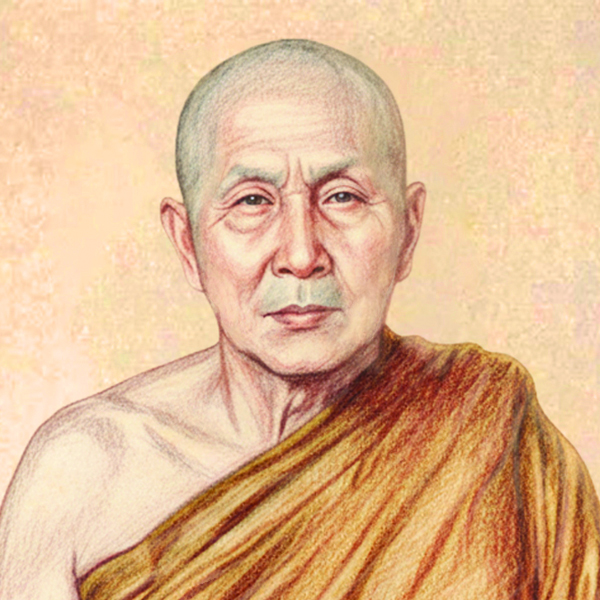
Note from the Translator
I am simply a practitioner who wishes only to preserve the teachings of Thailand’s noble monks. I have chosen a literal translation so that international readers receive the same essence and full content of every sentence as Thai readers do, without summarizing or adding personal interpretations. Regardless of whether the doctrines herein are "right" or "wrong" in your view, I kindly ask you to use your own wisdom and judgment to reflect upon them.
If you have any suggestions or find any errors where the translation does not match the original Thai text, please let me know. I would be most grateful for your feedback and will update the text to be as accurate as possible. Thank you.
A Spanish version of this article is available here: ESPAÑOL
This is because we do not note and contemplate Aṭṭhika—the three hundred bones well. Born, feeling glad, feeling sad, crying, tears flowing when suffering, when heated, when not getting what is desired—then crying. When the bones cry, look at them. When the bones cry, they have no tears. They just open the mouth and cry like that.
Welcome to The Abandoned Forest Temple... a tranquil space where the timeless teachings of the forest masters of Thailand are shared with the world in English and Spanish.
Today, let us travel back in time to the year 1983 and journey to Wat Tham Pha Plong. Let's take off our shoes, step up onto the sermon hall, and join together to listen to a Dhamma sermon by Ajahn Sim Buddhacaro.
Contemplating the Skull and Facial Bones
Namo tassa bhagavato arahato sammāsambuddhassa
Namo tassa bhagavato arahato sammāsambuddhassa
Namo
tassa bhagavato arahato sammāsambuddhassa
Homage to that Blessed One (Bhagavā), the Perfectly Enlightened Arahant (Arahanta Sammāsambuddha).
At this moment, let us all set our minds to Veneration through practice (Paṭipattipūjā) by sitting in Concentration (Samādhi) and Mental cultivation (Bhāvanā). Let everyone sit in the Cross-legged posture (Pallaṅka), placing the right leg over the left leg, placing the right hand over the left hand, setting the body straight, and closing the eyes. Today, let us all listen to the Bone (Aṭṭhika)—the three hundred bones of one's own. Do not misunderstand and think that this body, these Conditioned phenomena (Saṅkhāra), are stable, permanent, and lasting. In truth, our human body is simply bones connected together. They can fall apart at any time. The Buddha counted them as numbering up to three hundred pieces. But modern medical doctors do not count up to that number; that is, they do not count the cartilage, they only count the hard bones. When listening to Aṭṭhika—the three hundred bones, do not let the mind think elsewhere; gather the mind to be within the pile of bones.
That is, at this time, consider that all of us, by Convention (Sammuti), have been dead for many decades, and only the bones remain connected together. When we look at the pile of bones, look at the Skeleton (Aṭṭhikasaṅkhalikā), there is no need to look at the flesh and skin; gaze inward, recognizing that the flesh and skin have been dead for a long time. Right now, only the skeleton remains. That skeleton is a deceiving ghost. At this time, the skeleton is sitting in mental cultivation, sitting in concentration; so look at it. Look at the face, look at the eyes, but do not look at the eyes as flesh; look at the Eye socket (Akkhi-kūpa). These eye sockets are hollowed out on both sides. They are bones hollowed inward or bones receding inward, like eggshells that have been used for cooking and discarded, or arranged like eye sockets. These bones, let the mind look at this skeleton or these eye sockets; let the mind see within the mind how they are. So look... let it be seen clearly within one's own mind and heart. Do not think of them as things of beauty and grace. These two eye sockets, if gazed upon to be seen clearly and distinctly in the mind, there are no eyeballs; they are hollowed out. The characteristic of them being hollowed out is not beautiful; only the skeleton remains, the bones on both sides.
When seen clearly and distinctly, look further down. Moving down, look at the bridge of the nose. For the Nasal bone (Nāsaṭṭhika), do not let flesh and skin appear; let it be bone. It is also a hollow hole going inward, two holes going inward. In the time when we were not yet dead, mucus, when having a cold, flowed out of these holes; it is something of Repulsiveness (Paṭikūla) and filth. If seen as bone, with no flesh and skin covering it, the beauty and grace that we call a beautiful nose—there is none!! It is hollowed out, a hole going into the skull, and see that it is not beautiful as well. That anyone sees it as beautiful is... it is Delusion (Moha). If one sees that this nasal bone is not beautiful, being two hollow holes going inward, it is something ugly and hideous. This is it, the bone, the nasal bone. A little lower than that, it is the upper Jawbone (Hanuṭṭhika). Let this upper jawbone be seen entirely as bone. And then see the Teeth (Danta), see the fangs, piece by piece, attached on both sides. All of it, let it be seen as the bone of the teeth, the bone of the fangs, the upper jawbone. If looking at the shape of this jawbone, it is also neither beautiful nor graceful. When we go and see macaques, see monkeys, which we say are ugly and hideous, they are still better than our upper jawbone. This is not pleasant to look at all.
When it is noted that it is truly not beautiful, look all over. Now, for this jaw, there is the upper jawbone that was given to note; there is the lower jawbone. It is hanging. This lower jawbone... is hanging, hanging under the upper jawbone. Look so that it is seen. Right now, at this time, do not let the mind think elsewhere; let it be the Meditation subject (Kammaṭṭhāna) of Aṭṭhika—the three hundred bones. See the teeth, see the fangs piece by piece as well. This lower jaw curves upward, hooked together at the top, in the time when humans were not yet dead. But now it is dead; only the skeleton remains. Humans, whether consuming food, consuming fruit, eating anything at all, these upper and lower jawbones are like a mortar, like a pestle. A mortar and pestle for pounding chili paste, one could say. But for a mortar and pestle for pounding chili paste, humans pound it from the top down. The mortar from nature, these upper and lower jaws, use the lower jaw to pound upward, to make the food crushed, mashed, and finely ground. When swallowed down—while not yet dead until only bones remain—it would dissolve to nourish the flesh, skin, and meat (Maṃsa) within that body. If we note it right here, it will be seen again that the upper and lower jaws along with the teeth are not beautiful at all. They are just like a deceiving ghost. If in the time it is still alive, for some old people, their flesh and skin are completely withered and dry; only skin remains covering it. If we go and look, we will see that this lower jaw swings. When they eat food, it impacts upward, swinging loosely, loosely, continuously until they are full. This is the jawbone.
When seeing clearly into the jawbone—the upper one is ugly and hideous, the lower one is ugly and hideous like this—the mind must not come to cling to the bones. But here is the skull. This skull fits together... interlocking. That is, humans, when they are not yet dead, have a brain inside the skull. If anything comes to impact it—falling hard, falling from something—it can often lead to death; the brain shatters, the brain shifts, and one dies. It is this very skull that protects and guards it. Look to the front, the left, the right, and above to see where the bones interlock, fitting together like the jagged, clenched teeth of a dead dog's jaw. (Translator's Note: The phrase 'clenched teeth of a dead dog' refers to the Thai idiom 'Khiao Ma Tai' (เขี้ยวหมาตาย). It describes a specific type of interlocking or 'zigzag' pattern, much like the sutures of a skull. The imagery comes from the sight of a dog's skull, where the teeth are locked together so tightly in a serrated fashion that they become inseparable.) Look so that it is seen. As for the inside of the brain, do not let it be the brain; let it be empty. Look inside, and see it as bone. Let the mind know that this is the skull, the eye sockets, the nasal bone, the upper and lower jaws, along with the teeth, the fangs, the teeth. Where our mind sees that the teeth are pretty, the teeth are beautiful, the person is pretty, the person is beautiful—there are none. If only the skeleton remains, contemplating and seeing it like this, everyone is entirely equal. There is no one more beautiful or extraordinarily splendid than another; only the skeleton remains. There is no place anywhere to mistakenly think of as something beautiful and graceful. It is entirely Aṭṭhika—the three hundred bones.
Sweeping Awareness from the Neck to the Feet
When it is distinctly clear in the skull, move down. Below the skull, or where the skull rests, it is named the Neck bone (Gīvaṭṭhika). This skull rests, rests on the neck bone. This neck bone is a movable bone; it is a special bone, one could say, not like other bones. This bone can move. In the time when we were not yet dead, when there was flesh and skin there, to look at anything, it moves right here. It moves at the neck bone. The face moves according to that neck bone; it has many pieces. After that, the neck bone connects to the Spine (Piṭṭhiṭṭhika). The neck bone connects to the spine. That spine is in segments; look so that it is seen. It exists in the body, in those bones, the spine of everyone. And then there are the bones of the root of the arms on both sides, connecting inward. Connecting inward to the back bones, there is the Collarbone (Akkakaṭṭhika), or the knife bone. When we look at a person from the front, it is like, like the handle of a knife. Like a knife, like the handle of a knife (Translator's Note: In Thai, the collarbone is traditionally called 'Kraduk Mit' (Knife Bone) because its long, slightly curved shape resembles the handle of a traditional Thai knife). They also name it the knife bone, the collarbone. If taking the neck out, it is like, set there and it is like, like a fermented fish jar (Translator's Note: The literal Thai name for the collarbone is 'Hai-pla-ra'. It refers specifically to the hollow indentation or "pit" formed above the bone. To Thai people, this depression looks like the rim or the mouth of a clay jar used for fermenting fish. The description suggests that if the neck were removed, this hollow area would look like an open jar sitting on the shoulders). Look so that it is seen. See that the neck bone rests on and connects with the spine. The spine and the bones of the root of the arms on both sides also connect outward from there.
And in this arm bone, there is one bone, they name it the Gerng bone (Translator's Note: 'Gerng' is an Isan or Lao dialect word referring to the shoulder blade or scapula. Historically, the word also means a 'shield', fitting its thin, flat shape), which is thin; it allows our arm, in the time when not yet dead, to move. The upper part, or they call it the 'Gerng', they say it is a 'Gerng', it is thin. The lower arm connects up to the bone. The lower arm bones connect up on both sides. The upper arm bone, the lower arm bone, they are two bones, on both sides. That nature created it as two bones, is to make it durable, to last as long as possible, not letting it break, helping each other. When humans have not yet perished and died, doing any work, they rely on the lower arm bones to be quite strong. Nature created it. When we engage in mental cultivation, gaze to see the bones connecting at the elbows. The elbow joints that fold. The lower part further down connects with the bone, the hand bones. These hand bones are also in segments, connecting to the very end, called the fingers. They are fingers—the thumb, middle finger, index finger, ring finger, pinky finger on both sides. It is entirely bones, all of us. When gazing into these bones, there is no place that can be called beautiful; they are the most ugly and hideous. When looking to the tips of the hands and the tips of the feet, they are entirely bones, because it has been dead for a long, long time until the stench is gone.
Now, come look at the Breastbone (Uraṭṭhika). The spine is in segments, taking the Rib (Phāsukaṭṭhika). This rib is a bone preventing danger. That is, back in the time when humans were not yet dead, the liver, kidneys, intestines, lungs, blood, heart, and all of it, are only things that are easily ruptured and destroyed. Nature thus created the ribs, the spine, the back bones to protect them. If it is not yet time to die, do not let it die easily when falling down, tumbling, or whatever else. Even so, backs break, and ribs break all the time. At this time, we look to know where the position of the ribs, the position of the spine is located. What shape, color, and form do they have? So look according to that truth, all the way down to the Waist bone (Kaṭiṭṭhika). Now, when reaching the waist bone, if we set it up, looking at the back it is one lump; looking at the front it is one lump. See it as a skeleton, then. Inside it is empty, outside are the ribs piece by piece, slice by slice. If looking continuously from the eye sockets and the skull, those of us who easily fear ghosts would not be able to sleep, because... the bone ghost, our own bone ghost is deceiving us unceasingly. Look so that it is seen. Gaze at it!! If the mind is steadfast, it will appear. However it appears, look at it just like that. This is Aṭṭhika—the three hundred bones. Let us mentally cultivate Aṭṭhika—the three hundred bones. The waist bone is also in segments. The waist bone goes to connect with the hip bone, the tailbone, or the Geng-Ge bone as they call it (Translator's Note: "Geng-Ge" is an Isan dialect word referring to the sacrum or tailbone).
When the waist bone connects in the middle, then there are the root bones of the legs on both sides, coming to connect from here once again. The upper leg bone is round, meant to be fitted into where it is a hollow, a hole. In the time before dying, it connects right here on both sides. And so, the root of the upper leg bone connects here; the lower part connects to the knee. In this knee, the shin bone comes up. Coming to connect together, it is named the knee bone; it can fold. And there is still the Kneecap (Jāṇuṭṭhika); that is, it is a round bone, a bit flat. In the time when humans had not yet perished and died, this bone helped. It helped to prevent the leg bone and that knee bone from coming apart. It helps to support and stabilize. Look so that it is seen. Now the shin bone comes to connect. The lower end of the leg bone. This shin bone on both sides also has two bones each. The large bone is triangular. The upper end comes to connect to the leg bone segment. The shin bone comes to connect right here and then connects downward on both sides. Look to see both sides. At the very end is the bone. The shin bone goes to the very end. This shin bone goes to rest on the bone, the foot bone, the feet bone. That is to say, the shin bone goes to rest on its back, the back of the foot bone. The foot bone is in joints, in segments. Connecting downward are the toe bones: the big toe, the index toe, middle toe, ring toe, pinky toe just the same. Look so that it is seen now. Look so that it is seen in the mind. It is a skeleton sitting in mental cultivation listening to the Dhamma; Aṭṭhika—the three hundred bones. When we contemplate truthfully, it is not like this explanation. However much it can be seen clearly and distinctly, the better. Look downward all the way to the very tips of the hands and the tips of the feet. Look from the tips of the feet upward, all the way to the skull, until it is seen as a frame. A skeleton of three hundred bones. But there is no need to see it like in the hospital, or like they hang it in the temple pavilion. That is... that is on the outside; we do not take that!! Let it be seen as existing within the body and self of each and every one of us, the term: Aṭṭhika—the three hundred bones.
Recognizing the Skeleton in All Postures and Others
Note it going up and up, down and down, above and below constantly, until it is clearly and distinctly seen in the mind and heart. See one's own skeleton at all times. When the skeleton sits in concentration, how is it? Look. Sitting in whatever manner, let one look at one's own skeleton. It sits!! It stands up. The bones, when standing up, what shape do they take? Look!! As it walks along, do not let the bones fall apart. Set your mind—they must not come apart. Walk and see it. All the bones will move back and forth. Let it appear entirely to the mind and heart of the one engaged in Contemplation (Anupassanā). When the bones walk, it is not beautiful. Clunky, clunky, going along just like that. Look so that it is seen. When walking, see the bones walking as a frame... existing as a shape. Here, when traveling by vehicles, look at the skeleton sitting. Sitting, and what work does it do? Sitting in a car, in a boat, in whatever it may be, do not forget the skeleton. Aṭṭhika—the three hundred bones. When it gets in a vehicle, when it gets out of a vehicle, one must be careful. The bones will break, because only bones remain.
Now, all the way to standing, walking, sitting, and lying down, see the bones lying down. Waking up, the bones wake up. When speaking anything, the bones speak. When eating, the bones eat. When we people cry or laugh, the bones cry and laugh. Note it to keep up with it like that continuously. When noting our bones so that it is vividly clear, the bones of other people are the same. Whether woman, whether man, whether youth, adult, or elderly, they are the very same. Aṭṭhika—the three hundred bones. No one is more beautiful than another. It's all the same. Aṭṭhika—the three hundred bones. Gaze until seeing people, no matter what nationality or language they may be; even a Westerner will only have the nasal bone remaining. A pointy nose is not there. Blue eyes, white eyes, cloudy eyes are not there. The bones are entirely the same, the skeleton. Note it, letting the mind, the one who knows, look at the skeleton of oneself and of other people. Do not let it be seen as something beautiful and graceful. The true Element (Dhātu) is not beautiful and not graceful. The mind deludedly conjured up thoughts on its own in the wrong way. Thus, Lust (Rāga), Craving (Taṇhā), and Restlessness and remorse (Uddhaccakukkucca) arise. Having ordained in the religion for not even a hundred years, one wants to Disrobe (Sikkhāpaccakkhāna), all because one does not note Aṭṭhika—the three hundred bones of one's own. If noting Aṭṭhika—the three hundred bones of one's own so that it is vividly clear, the mind will not be agitated. Sitting, one sees the three hundred bones. Where will these three hundred bones go and fall apart, I wonder... Walking along, one sees it walking along. Sitting, one sees the bones sitting, the skeleton. It is not merely thinking and pondering. Make it see the image within that as well, because there is an image.
Bones are solid objects. They are an image, being a frame. Thus it is said that the skeleton, when connected without letting it fall apart at all, is called a frame. When walking along, it goes wobbling and swaying, wobbling and swaying. (Translator's Note: In Thai, there is a wordplay between the noun 'Khrong' , which means a 'frame' or 'skeleton,' and the onomatopoeic word 'Khrong-Khreng', which describes a rickety, unstable, or wobbling motion. The preacher is emphasizing that this 'frame' of bones is not a solid, static thing, but a shaky structure that wobbles as it moves). That is it, it is called a frame. The skeleton. There is no one said to be more beautiful than another. They are entirely skeletons. Let the mind know, let it understand. Do not come to be deluded by your own skeleton as being good or graceful, and do not go being deluded by the skeletons of other people as being pretty or graceful, all of us. The Blessed One noted and contemplated moving up and moving down, moving down and moving up (Translator's Note: In the context of meditation, this refers to sweeping the awareness up and down the body, contemplating in forward and reverse order, known as Anuloma and Paṭiloma), skillfully, until there was no delusion or forgetting, until not misunderstanding and thinking it is something else. He saw that it is a skeleton just like that. As for us, whether we know it or not, Aṭṭhika—these three hundred bones—they’ve been there since we were in our mother's womb. Born out, they are there. But at that stage, they are still small. Watch it all the time until you get it. They are small, it is true, but the bones are not yet broken. For the most part, when we people are grown, the bones like to break. Some have a broken shin, some have a broken leg, broken ribs, broken arms, broken neck, or whatever else. This is because they do not note and contemplate; they don't look after themselves. The Buddha looked after His three hundred bones; He reached eighty years of age. Nothing was broken. All good!! Some of our people, not even reaching eighty years, have broken this and broken that. Besides breaking, they also die. Because they do not note Aṭṭhika—the three hundred bones.
Overcoming Defilements and Attaining Peace of Mind
Mindfulness (Sati), concentration, and Wisdom (Paññā) therefore do not arise. Therefore, one cannot look after one's own Aṭṭhika—these three hundred bones—all the way to the end. You must note and contemplate. Do not come sit guarding Aṭṭhika—the three hundred bones of your own, and not note and contemplate, coming to be possessive of the bones. Possessive of the bones like a dog. When it gets an animal bone, it comes to bite, biting and eating the bone. A dry bone. A bone with no flesh. Every one of us, when noting down to the bone—the Aṭṭhika, the three hundred bones—we just come to be truly infatuated with those three hundred bones. Where is it good? Contemplate it. Look at the front, look at the back. Look in order, up and down. How is it? Is it real, or is it not? The truth is, it exists. But it's because the mind is scattered and restless, wandering off elsewhere. One's own bones numbering three hundred pieces, one does not count, does not reflect upon them. The skeleton ghost is deceiving. Both sitting, it deceives when sitting; standing, it deceives when standing; walking, it deceives when walking. Eating rice, drinking water, the bones play the role. But the mind does not incline and bring it inward, therefore becoming blindly deluded and intoxicated according to the Defilement (Kilesa) of the world. If it sees it as a skeleton, sitting, it is a skeleton like this. Standing, it is a skeleton like this. Walking, it is a skeleton walking like this. Lying down, it is a skeleton lying down like this. Paying respects to the Buddha—the bones take a certain shape, posing like this. Sitting in concentration, sitting cross-legged, one sees the skeleton sitting. This means Mindfulness and clear comprehension (Satisampajañña) are following to know, following to see Aṭṭhika—the three hundred bones of one's own. And not letting Distortion (Vipallāsa) and deviation come to overwhelm the heart, going to see it as something stable and permanent, as something beautiful, something graceful. That is not correct. What is correct is that it must be seen as Aṭṭhika—the three hundred bones connected together. No one is its owner or master. Once dead, the flesh, the skin, the flesh all slip away entirely; the bones exist just the same, no matter whose they are.
Therefore, the Buddha instructed all the disciples, all practitioners of Dhamma and meditation subjects, to note Aṭṭhika—the three hundred bones, so that it is vividly clear in the mind and heart. The heart will then be able to abandon defilements, lust, and craving inside completely. It will be able to abandon defilements and Hatred (Dosa) in the mind and heart completely. It will be able to abandon delusion, Ignorance (Avijjā), and craving in the mind and heart completely. Because that the mind comes to be deluded in this Aggregate of corporeality (Rūpakkhandha), in this skeleton, is because it does not note and contemplate Aṭṭhika—the three hundred bones well. Born, feeling glad, feeling sad, crying, tears flowing when it suffers, when it is heated, when it does not get what is desired, then crying. When the bones cry, look at them. When the bones cry, they have no tears. They just open the mouth and cry like that. Look so that it is seen. If not seen, do not send the heart elsewhere. How it moves back and forth, follow... and know. To be able to know is Virtue (Sīla), is Dhamma, is the Dhamma teaching of the Buddha. When seeing vividly and clearly that this body, this pile of bones, is truly like this indeed, it is just as if the Dhamma teaches. The Buddha teaches, the Dhamma teaches, the Noble Sangha (Ariyasaṅgha) teaches. They teach so that our mind and heart know, not so that the bones know. For the mind and heart that are deluded, they prevent it from coming to be deluded by the bones.
Therefore, all practitioners, do not be heedless. Aṭṭhika—the three hundred bones of your own; if you can’t look, if you don’t see, don’t give up. Get up and engage in mental cultivation. Look at Aṭṭhika—the three hundred bones of your own so that it is vividly clear. And then you will see those of other people, of others, all over, filling the world. They are entirely the same. This is Aṭṭhika—the three hundred bones. Let everyone set yourselves to note and contemplate so that it is vividly clear and distinct within your own mind and heart, until the mind and heart are not deluded, do not forget. Whoever laughs, cries, whoever is glad, is sad, it is just those three hundred bones. Set your mind to veneration through practice and mental cultivation to see it clearly within the mind and heart. When it is seen clearly to the fullest, it will uproot by itself. The defilement of anger will be exhausted. The defilement of greed, of wanting to get, will be exhausted. Bring it for what? To decorate and dress up the three hundred bones? Bringing beautiful cloth to dress it beautifully, does it make it beautiful? It is not beautiful. It is three hundred bones. A ghost deceiving at all times. Let the mind know, let it understand.
When practitioners in the Buddhist religion become clear in Aṭṭhika—the three hundred bones, a heart as hot as fire is not there. The heart will be cool like ice. Sitting, it is cool. Lying down, it is cool. Wherever you go, when you talk, you aren't gruff and blunt. Being composed and careful, wherever one is, wherever one goes, whatever one does, it is called Sense-restraint (Indriyasaṃvara). One can guard the eyes, guard the ears, guard the nose, guard the body, guard everything, because of noting Aṭṭhika—the three hundred bones. Therefore, when all of us have heard and listened, let us note and remember, taking it to practice and conduct ourselves. Then we will receive happiness and prosperity in the Buddhist religion. As has been expounded, it is appropriate for the time. Thus (Evaṃ) it is, by these very means.
Sabbītiyo vivajjantu, sabbarogo vinassatu, mā te bhavatvantarāyo, sukhī dīghāyuko bhava.
Abhivādanasīlissa niccaṃ vuḍḍhāpacāyino cattāro dhammā vaḍḍhanti: āyu vaṇṇo sukhaṃ balaṃ.
(May all distress be averted, may every disease be destroyed, may no dangers be
upon you, may you be happy and live long. For one of respectful nature who constantly honors the
elders, four qualities increase: long life, beauty, happiness, and strength.)