Note from the Translator
I am simply a practitioner who wishes only to preserve the teachings of Thailand’s noble monks. I have chosen a literal translation so that international readers receive the same essence and full content of every sentence as Thai readers do, without summarizing or adding personal interpretations. Regardless of whether the doctrines herein are "right" or "wrong" in your view, I kindly ask you to use your own wisdom and judgment to reflect upon them.
If you have any suggestions or find any errors where the translation does not match the original Thai text, please let me know. I would be most grateful for your feedback and will update the text to be as accurate as possible. Thank you.
A Spanish version of this article is available here: ESPAÑOL
Normally, people break Virtue (Sīla) because Defilement (Kilesa) overwhelms the Mind (Citta)... which is mostly not a major issue, but rather minor things that we fail to keep up with, so we carelessly act out of habit. We get angry without realizing it, crush an ant without thinking, or hurt others with words, justifying it to ourselves by saying, "I'm just speaking the truth." These are the normal conditions of a mind that has never undergone training... the condition of the mind that is overwhelmed by defilements without us ever realizing it.
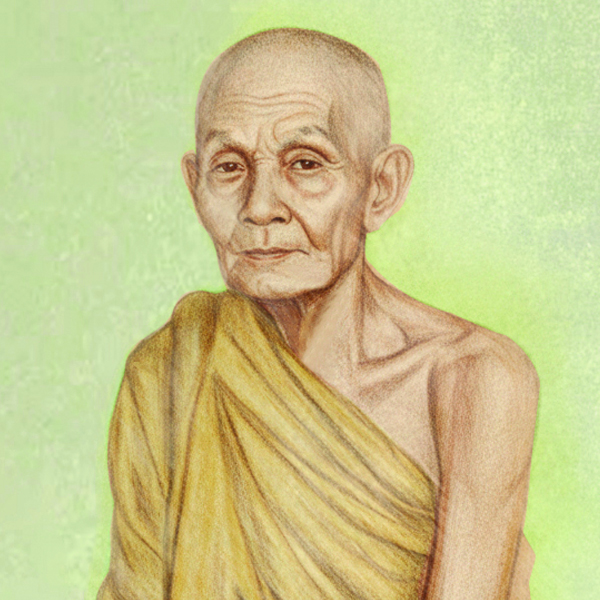
Luang Pu Dune Atulo taught that practice does not mean prohibiting or suppressing defilements, but to know them in time — right as they arise. When Mindfulness (Sati) arises and promptly knows the defilement, that defilement will extinguish on its own automatically. When defilements cannot overwhelm the mind, bodily and verbal transgressions of virtue will not occur. This results in the arising of "automatic virtue," which is many times more stable than forcing and controlling oneself.
This content is woven from the teachings of Luang Pu Dune Atulo, from the book by Ajahn Pramote Pamojjo, a direct disciple of the venerable Luang Pu Dune Atulo, and considered a third-generation Dhamma heir of the Dhamma army in the lineage of Luang Pu Mun.
And in order for this profound Dhamma to reach the hearts of people in the present era, Ajahn Pramote often brings up contemporary examples to accompany his teaching. Therefore, if you hear mentions of technology or modern-day stories, please know that it is a Skillful means (Kusalopāya) in transmitting the teaching, while the pure core Dhamma of Luang Pu Dune remains completely and fully intact.
Step One: How to observe the mind to have virtue
Why is it that people can break the five precepts? Can you think of the reason? It is because defilement overwhelms the mind. A person will kill others, beat them, hurt them, or curse them because Aversion (Dosa) overwhelms the mind. A person will act contrary to virtue, contrary to Dhamma, will steal others' belongings, or commit adultery, because Lust (Rāga) overwhelms the mind. Consuming alcohol and intoxicants, lacking mindfulness, Delusion (Moha) overwhelms the mind. Therefore, people can break virtue because defilements overwhelm the mind. But whenever we know the mind right away, Whatever defilement arises at the mind, know it right away. Whatever arises at the mind, know it right away — know it often. There is no need to go and forbid it. Because the mind is Non-self (Anattā), it cannot be ordered. Defilement is also non-self; it cannot be ordered not to arise. No one can forbid defilements from arising, you know. They truly cannot be forbidden. No one can order the mind, telling it not to have defilements. It cannot be ordered. Both the mind and defilements fall under the condition called non-self. They share the same characteristic, which is that they are not under anyone's commanding power.
Then what should we do? From now on, if any defilement arises at our mind and heart, know it right away — know it often. Do we know anger? Has anyone ever been angry? Is there anyone? Ah... there are lots of easily angered people. Are the rest of you Non-returners (Anāgāmī) who no longer get angry? Is that right? I suspect it's more likely those who refuse to confess. Anger is something we are familiar with... Do we know greed? Greed... wanting this, wanting that. Has anyone ever wanted a mobile phone? Is there anyone? Wanting a motorcycle, wanting a car, wanting a house, wanting a wife. Having one, and still wanting another. Craving has no end. As the Buddha taught: Natthi taṇhāsamā nadī, there is no river equal to Craving (Taṇhā).
If craving arises and we do not promptly know it, you know, craving will overwhelm the heart. Wanting it very much and not getting it, one will find a way until they get it. Even if it breaks virtue and breaks the Dhamma, they can do it.
Who knows Restlessness (Uddhacca)? Has anyone ever been restless? Ah... quite a lot. It is good that you can see it. A person who will meditate well must be honest with themselves, you know. If our heart has defilements, we must know right away that there are defilements. If we want to practice Meditation (Kammaṭṭhāna) well, but hang up a sign saying "I am already good," we are not truly good!! If one is truly good, they must not suffer. If one is still suffering, it shows they are not truly good yet.
Therefore, each type of defilement, we already know. Lust, we already know. Aversion, we already know. Restlessness, we already know. Sloth (Thīna), do you know it? You know it too, right? Can you be jealous? Can you be afraid? Can you be anxious? Do you get anxious many times a day? Can each person feel it? Like coming to listen to Ajahn's sermon, being anxious about not arriving in time. Once you arrived in time, you became anxious... afraid of going home late. One can always find something to be anxious about, you know. All types of defilements, we already know them. It is not difficult for us to know. Luang Pu Dune therefore said that the practice is not difficult; it is difficult only for those who do not practice. Defilements like lust, aversion, delusion, restlessness, sloth, gladness, sadness—we know them all!! But we neglect to know them.
From now on, we will not neglect them. Whatever defilement arises at the mind, know it right away. Do not go and forbid it. Whenever a defilement arises and we do not promptly know it, it will fall into an extreme. The extreme of indulging the defilement. The extreme of indulging the defilement is named Indulgence in sensual pleasures (Kāmasukhallikānuyoga). It will be restless in Sensuality (Kāma), restless in Form (Rūpa), restless in Sound (Sadda), restless in Odour (Gandha), restless in Taste (Rasa), restless in Contact (Phassa), restless in liking, restless in disliking. Sensuality, Resentment (Paṭigha), lust, and aversion arise exactly where the mind wanders off, where it becomes restless. But do not go and forbid it. When the mind is restless, we keep knowing the mind. Being restless, wandering off, is called... being too loose. But if we are afraid that the mind will be restless and we stare at it, watch it, not letting it out of our sight, that is called "being too tight." It is an extreme on the other side called Self-mortification (Attakilamathānuyoga). Whenever we stare at it, it will become constrained in the heart. Has anyone ever practiced and felt constrained? Is there anyone? For some people, just seeing their faces, I know that... they haven't stopped being constrained yet. Even when not practicing, they are still glaring at it. Afraid the mind will get lost, afraid the mind will run away, afraid defilements will arise. All these fears, fears, fears, they are all aversion.
When we are very afraid, we will keep staring at it, watching it, not letting it out of our sight. Observing the mind does not mean watching it without letting it out of sight, you know. We let the eye, ear, nose, tongue, body, and mind work according to nature. The eye sees a form, our mind wavers, feeling pleasure or displeasure, and we promptly know it. This is the proper way to practice. If we go and glare at the mind to make it still, forbidding it to have any Feeling (Vedanā)... this is too tight. If a feeling arises and we still do not know... this is too loose. We must not let our mind go to the two extremes, which are the side of being too tight and the side of being too loose. Let us know right away. Whatever defilement arises at the mind, keep knowing. Do not go and wait to see when a defilement will arise. If you wait to see, it will be too tight. If you observe and want the defilement to disappear, staring with the desire to destroy the defilement... this is also too tight. If you are careless and do not promptly know the defilement that arises... this is too loose. If a defilement arises and you allow it to overwhelm the mind, this is also too loose. We must not let the mind go to these two extremes. Simply take it that when a defilement arises, you know it. Training just this much is enough.
If a defilement arises and you know it right away, the defilement cannot overwhelm the mind. If the defilement cannot overwhelm the mind... automatic virtue will arise. The people who study meditation with Ajahn, countless in number. How many tens of thousands, hundreds of thousands, I don't know. They are all over the world. A great number... come to report, saying that in the past it was difficult to observe virtue, but now it is easy to observe virtue. Why? Because in the past, we guarded virtue at the mouth, at the hands, at the feet, keeping control of ourselves, keeping ourselves forced not to break virtue. Want to curse? Suppress it, keep the mouth shut tight so as not to curse them. Want to punch? Keep the hands tucked away... don't punch them. But the heart is constrained, you know. If we practice meditation, practice observing our own mind and heart, when a defilement arises we promptly know it, the defilement will extinguish on its own. The moment mindfulness arises, defilement will extinguish. This is a law of Dhamma, a completely natural law. Whenever there is defilement, at that time there is no mindfulness. Whenever there is mindfulness, at that time... there will be no defilement. Therefore... if a defilement arises, we promptly know it, mindfulness arises, the defilement will extinguish on its own. When the defilement is extinguished, even without the intention to observe virtue, virtue is present. Automatic virtue will arise. If one truly wants to attain the Path and Fruition (Maggaphala), it must reach the level of automatic virtue. Because at the time the Noble Path (Ariyamagga) is about to arise, virtue is automatic, mindfulness is automatic, Concentration (Samādhi) is automatic, and Wisdom (Paññā) is automatic. They converge at the mind, the one and only place.
Therefore... if we still observe virtue at the mouth, at the hands, at the feet, still trying to control and force ourselves, these kinds of virtue are patchy. Whenever mindfulness is lacking, the mouth has already lashed out at them. But if we have agile mindfulness, whatever defilement arises at the mind... promptly know it. Whatever defilement arises at the mind... promptly know it. It will not scold anyone, not curse anyone, not beat anyone, not steal anyone's belongings, not commit adultery with anyone, not want to consume alcohol and intoxicants. Why consume them to lose mindfulness? Normally, there is no mindfulness anyway. Consuming it makes it even worse than before; mindfulness is already hard enough to find. Here... practice observing the mind. Know right away the defilements that arise at the mind. Practice observing the mind at the very beginning, and we will gain virtue. Here!!!
Step Two: How to observe the mind to give rise to concentration
We continue to practice observing the mind further. Observing the mind can give rise to concentration, you know. One time... Ajahn was practicing and went to hand in homework, went to report on the practice to Luang Pu Dune. At that time, I had been practicing with him for seven months. I respectfully reported to him that... as I practiced, the mind drifted off a little bit. He said... the mind had entered concentration. At that time, I was still practicing foolishly, and went to argue with him, saying that I was not sitting in meditation at that moment, I was not aware of Buddho (Buddho), I was not aware of the breath at all. I was just observing the mind neutrally. Why did Luang Pu say the mind entered concentration? Luang Pu said, if you know how to observe the mind, automatic concentration will arise. The opposite of concentration is restlessness. Restless about what? It can be restless in sensuality, restless in things one is dissatisfied with, restless in doubt and hesitation. It can be restless aimlessly, not even knowing what it is restless about. It can be restless in all sorts of ways. Being restless and then becoming slothful, dull, sluggish, unable to discern anything clearly at all. In summary, it is a condition where the mind is not firmly established. Therefore... this firm establishment and the restlessness of the mind, they are opposites. Concentration is the firm establishment of the mind. When the mind is restless, what is it like? The mind will get lost, the mind will flow away. Luang Pu Dune called it "the mind going out" or sometimes called it "the mind sending out."
Where can the mind be sent out? Sent out through the eye, sent out through the ear, sent out through the nose, through the tongue, through the body, through the mind. Sent out to receive external Mental objects (Ārammaṇa). Luang Pu taught that the mind has a nature that likes to send out. For example, sent out to look. Do you notice? Whenever looking, one always looks at others, always looks at other things. Never looking at oneself. Sent out to listen. One listens to others speaking. Do you ever listen to yourself speak? Not often. You don't want to listen. You want others to listen to you, but you do not listen to yourself. Sent out to smell odours, sent out to taste flavours, sent out to know contact at the body. Here!! The mind goes out. The mind flows out through the eye, ear, nose, tongue, body. If it is sent out to think, to ponder, to concoct, to fabricate, this is sending out through the mind. Do you notice? We are sending out through the mind all day long. One moment thinking of the past, the next moment thinking of the future. One moment restless over there, the next moment restless over here. We forget the present. Our mind is not firmly established in the present. This kind of mind is exactly what is called... a mind without concentration.
If one wants the mind to have concentration, what should one do? One must keep knowing promptly the mind that is restless. Keep knowing promptly the mind that sends out through the eye, sends out through the ear, through the nose, through the tongue, through the body, through the mind. Sending out through the mind means sending out to think, to ponder something like this. Keep knowing promptly. When the mind flows out through the eye... know it promptly. When the mind flows out through the ear... know it promptly. It is not difficult to know, you see. Do you notice? When we look at something, our mind will go to be with the point we are looking at, go to be with the thing we are looking at. Suppose we are walking along and we see a beautiful woman walking by. We go to look at the beautiful woman. Our mind will go to be at the woman. Can you picture it? The mind is not with oneself, you know.
If it were with oneself... one would clearly see. There is only a rotting bag of skin... walking by. One would feel like that. Here, the mind likes to go out. Flowing out all the time. Therefore... let us keep knowing promptly when the mind deflects out through the eye, deflects out through the ear. When we hear people conversing, we want to know. If they speak loudly, we don't really want to listen. If they whisper softly, we want to listen. See? Wanting to listen. Intentionally listening. While intentionally listening to them, we forget our own body and mind. Can you picture it? The mind wanders out, you know. While we are looking, we also forget the body... forget our own mind. The mind sends out. While thinking of this, thinking of that, we also forget the body, forget the mind. Do you notice? When we sit thinking about this matter and that matter, we have a body... we forget the body. We have a mind... we forget the mind. Therefore... whenever the mind wanders off into the world of thought, the mind wanders off to look, wanders off to listen, wanders off to smell odours, wanders off to know tastes, wanders off to know bodily contact, cold, hot, soft, hard. If the mind flows out, wanders off, we have a body... we forget. Have a mind... we forget. The mind is not with oneself.
Concentration... if speaking in ordinary, everyday Thai, is precisely the condition where the mind is with oneself. Our mind forgets itself all the time, you know. It flows out all the time. Flows to look, flows to listen, flows to smell odours, flows to taste flavours, flows to know bodily contact, flows to think and ponder the past, the future, completely chaotic. It forgets itself, forgets its own body, forgets its own mind. A mind that is not with oneself is a mind that has no concentration. A mind that has concentration will be with oneself. Therefore... let us come to keep practicing observing the mind. How to observe the mind to make the mind stay with oneself? One must keep knowing promptly when the mind flows away. Keep knowing promptly when the mind wanders off. The mind runs to look, promptly know that the mind runs to look. The mind runs to listen, promptly know that the mind runs to listen. The mind runs to think, promptly know that the mind runs to think. At the beginning... train just these three channels first. Because these three channels occur frequently.
Between looking, between listening, between thinking, which one does our mind do more? Can you think of it? Whoever says looking is the most, raise your hand!! Is there anyone? Whoever says listening. Whoever says thinking. Ah... thinking wins. It is a democracy. The truth is, it's not a democracy. This is Dhammacracy. Truly in Dhamma, the mind wanders into the world of thought the most. Therefore, since it can wander in six channels, if we come to study all six channels, it is too difficult. So we come to study in just the single channel of the mind. That is, the mind wandering through the mind channel. Keep knowing promptly. For example... the mind wanders to think, keep knowing promptly. The mind wanders to think, keep knowing promptly.
How can we know promptly well, know promptly easily, know promptly quickly? We must have a dwelling place for the mind to stay. It can stay with Buddho, or stay with the breath. Whatever anyone is skilled at, take that one. Whoever is skilled at Buddho, stays with Buddho. Whoever is skilled at knowing the breath, knows the breath. Whoever uses Na Ma Pa Ta, Sammā Arahaṃ (Sammā Arahaṃ), observes the rising and falling of the abdomen, or moves the hands like Luang Por Tien. It is all the same. Any meditation subject will do. But... you must keep knowing the mind promptly. For example, reciting Buddho... the mind runs away to think, keep knowing promptly. Breathing... the mind runs away to think, keep knowing promptly. Observing the rising and falling of the abdomen... the mind runs away to think, keep knowing promptly. Samma Araham... the mind runs away to think, know promptly again. If we keep promptly knowing the mind that flows away, keep knowing frequently. Once it flows, immediately know. Once it flows, immediately know. The mind will not flow. When the mind does not flow, the mind will become firmly established. A firmly established mind is called a mind with concentration. The mind will be The Knower (Buddho), the awakened, the blossomed. The mind stays with oneself. Next... when the body moves, it will feel it automatically. When the mind moves... it will feel it automatically. Not forgetting oneself. Turning left and looking right, one can be fully aware of oneself all the time.
The people who study meditation with Ajahn right now, not to mention when awake, even when asleep, turning left, turning right, they still know it. People who can feel to this extent, there are a lot of them. Are there any among us who can feel it now? Is there anyone? Is there any at all? Sleeping, turning left, turning right... feeling it right away. If the heart has strengthened mindfulness, you know, the heart will become firmly established. Keep practicing. Practice when awake right here. And when asleep, as soon as the mind shifts a tiny bit, the mind will wake up, but the body is still asleep. If you can train to this extent, there is no need to be afraid of falling into hell. When we are about to die, and a bad Mental sign (Nimitta) arises, automatic mindfulness will work. It is similar to sleeping and having a nightmare. Who has ever slept, had a nightmare, and mindfulness was able to recollect? Is there anyone? Raise your hands. Ah... this group is at a bit less risk of hell now. But still not one hundred percent. There is still a chance to miss. If at the time of dying, a bad mental sign arises, seeing the copper cauldron of hell, the mind becomes startled, mindfulness immediately recollects, and the copper cauldron disappears completely. The heart becomes the knower, the awakened. The heart becomes Wholesome (Kusala). It will not fall into hell, you know. Let us keep promptly knowing the mind that flows away, the mind that wanders off, by finding a dwelling place to serve as an observation tool for the mind. You can stay with Buddho, stay with the breath, stay with the rising and falling of the abdomen, anything at all. But no matter what you stay with, keep promptly knowing the mind.
If we practice and we abandon the mind, it is equivalent to us... abandoning the essence and substance of the practice. It is not only Luang Pu Dune who emphasized the mind. Many of the forest masters that Luang Por went to study with, they all similarly emphasized down to the mind. Like Luang Pu Tate, he explicitly taught that in practicing, if one does not reach the mind and heart, one does not get the essence and substance of the practice. He spoke to this extent, you know. Look at the Dhamma that the Buddha taught. He said... the heart is the chief, the heart is the leader, the heart is the forerunner. All Dhammas are accomplished by the heart. Dhammas that are wholesome, Unwholesome (Akusala), or path, fruition, and Nirvana (Nibbāna), are accomplished by the heart. By our very own mind and heart here. Originally, we used to train concentration by forcing ourselves, right? Buddho, Buddho, forcing it not to run away. It will become stressed. Stressed, and the mind will not be peaceful. But if we recite Buddho comfortably, you know, when the mind runs away we quickly know it promptly, the mind will be peaceful. Whenever the mind is happy, the mind will be peaceful. Whenever the mind is not happy, the mind will be restless. Therefore... when we are going to train concentration, simply let us keep promptly knowing our mind comfortably. Reciting Buddho, the mind runs away, then know. Keep knowing comfortably. It will gradually run away for shorter and shorter periods. Where it used to run far away, it gradually shrinks, gradually shrinks down. Gathering into the single mind alone.
Therefore... let us practice observing the mind, observing the heart, you see. In the long run, automatic concentration will arise on its own. Merely being aware of oneself, the mind becomes firmly established automatically, and can proceed with wisdom as a concentration of the type Characteristic-examining absorption (Lakkhaṇūpanijjhāna). The mind will become firmly established as the knower, the awakened, the blossomed. Not the ponderer, the thinker, the concocter, the fabricator, the one getting lost outside. And whenever the mind needs to rest, the mind will gather down to rest at the mind on its own. It can be peacefulness at the level of Absorption concentration (Appanāsamādhi) indeed. It is a concentration of the type Object-examining absorption (Ārammaṇūpanijjhāna). Therefore... if we promptly know the defilements that arise at the mind, we will gain virtue. If we promptly know the mind that sends out, we will gain concentration.
Step Three: How to observe the mind to give rise to wisdom
Now, how to observe the mind to give rise to wisdom. This part is important. Some people study and teach in distorted ways, even contradicting the teachings of the Buddha. Thinking they are observing the mind, observing the mind, but instead they are not truly observing the mind. Like going to prop up the mind to be still, to be empty. Whatever thought arises, brushing it away, brushing it away. Whatever Volitional formations (Saṅkhāra) arise, brushing them all away entirely. Only wanting emptiness. This is not observing the mind to give rise to letting-go wisdom, but it is going to fabricate the mind. That is, contriving the mind to be empty. Like that is not the entirety of observing the mind. Luang Pu did not teach to end the practice just at that point. However, there are teachings that are similar to this as well. The one saying... the mind flows away and then know, the mind flows away and then know. What says to brush away is a teaching to give rise to concentration, you know. Therefore... when some people say that Luang Pu taught to prop up the mind to be still, to prop up the mind to be empty, whatever arises brush it away completely, and maintain the mind to be empty. Here, one must clearly distinguish what level of observing the mind is being taught. That is teaching the observation of the mind to give rise to concentration only. It is not observing the mind to give rise to wisdom. Doing it like that can take you to the Brahma realms, but you cannot go to Nirvana. It aligns with what Luang Pu Boonjun Jantawaro once taught Ajahn: What kind of Nirvana has entering and exiting? That is, as long as there is still inside and outside, it is not the true Nirvana. And that mind that is still and empty is not the "One Mind" according to the teachings of Luang Pu Dune, but it is merely the mind of a Formless Brahma (Arūpabrahma). If we study the teachings of Luang Pu thoroughly, We will not end our practice at simply making the mind still and empty, and maintaining it just like that.
Observing the mind to give rise to wisdom, Luang Pu himself learned it from Luang Pu Mun. What did Luang Pu Mun teach? Luang Pu Mun taught Luang Pu Dune that "Sabbe saṅkhārā sabbe saññā aniccā." All volitional formations, all Perceptions (Saññā) are Impermanence (Anicca). "Sabbe saṅkhārā sabbe saññā anattā." All volitional formations, all perceptions are non-self, cannot be forced. What did he study? He studied about volitional formations. Studied about the fabrications of the mind. He did not go to glare directly at the mind itself. Did not go to forbid the fabrications of the mind. The mind can fabricate, but promptly know it. If at any time one tries to forbid the mind from fabricating, tries to prop up the mind to be good, this he called... getting lost in the states of the mind. Going in to interfere with the mind. Which is exactly... another form of fabrication itself. Called Imperturbable volitional formation (Āneñjābhisaṅkhāra).
Ajahn has practiced wrongly before. When I came to study with him for the first time, on February 6, 1982. After that, I went to practice for three months. During the Visakha Bucha period, I came to pay respects to him again. I came to report to him that right now, the mind is the knower. The mind flows, and then is known. And I could maintain the mind all day long. I was able to prop up the mind. The mind rarely flowed out to merge with the mental object. Or if it flowed to merge with the mental object, before long... it separated back into the knower. Peaceful, firmly established, empty again. I thought he would praise me for observing the mind skillfully. The mind doesn't run away anywhere anymore. The mind is still, empty, remaining peaceful. He didn't praise me at all. He scolded me instead, saying, "That is getting lost in interfering with the symptoms of the mind. You haven't observed the mind yet. The word 'observe' tells itself already. 'Observe' is 'observe', 'observe' is not 'prop up', 'observe' is not 'force', 'observe' does not mean 'control', 'observe' is not 'glare'."
What does observing mean? Observing means... however the mind is, just know it to be exactly like that. Whatever the mind is, the mind simply follows the volitional formations that come to fabricate the mind. It follows the perceptions that come to fabricate the mind. Volitional formations come to fabricate the mind, for example... lust comes to fabricate the mind, the mind then has lust. If we know how to observe the mind, we will clearly see that the mind that has lust arising, did we order it to arise? We did not order it. It arises on its own. We cannot force it. Can we forbid it not to arise? We cannot forbid it. The mind will have lust, do you see? See what? See impermanence. Originally there was no lust. Now there is lust. Here, one sees that... the mind is impermanent. Seeing by observing through the fabrication itself. Not looking directly at the mind itself, you know. Luang Pu once emphasized, "Do not use the mind to search for the mind. You could go on for another eon and you wouldn't find it." Meaning, do not try to go wandering around searching and wandering around looking directly at the mind itself. Ajahn truly made this mistake too. A mistake of severe proportions this time.
At that time, I went to practice at the Wat Na Ruen Jam, Luang Por Kuen's temple. Does anyone know Luang Por Kuen? Is there anyone? Very few left by now. He was a highly capable monk. Luang Por Kuen saw Ajahn practicing. The mind, instead of being firmly established as the knower, the observer, the mind instead flowed in to grope for internal mental objects. Going in deep, deep, deep, going inside. He said... Hey!!! Pramote, come observe the mind. That's not the mind. That has gone inside. You've plunged in. Come back and observe the mind here. Come back, come back. So I thought... Ah!!! This means I must grab hold of the knowing mind itself. Not let it flow away. I've gotten the ultimate secret technique. Today I'll probably attain something. I went straight into the Kuti. He let me stay in a Kuti near him at the Wat Na Ruen Jam. Entering the Kuti, I went and grabbed hold of the knower. He said to observe the mind, the mind is the one that knows. I went and stared at it, not letting it out of my sight. It became glaring at the knower. The moment we glare at the knower, the knower will become the known object. Another knower arises layered over it. And then we go to look at the knower, and another knower arises, layering, layering, layering on without end. I observed and observed, you know, until near dawn. Then I became furious. This is wrong. Off the path. It's not the path. Luang Pu Dune used to teach to observe the mind, but Luang Por Kuen came and taught me to glare at the mind. At that moment I was furious at him. When it was fully bright, I pushed the door out. Going to reproach him. He was even smarter than me. He pushed his Kuti door out before me. I opened my mouth, hadn't even started to reproach, he spoke first. "Pramote!!! Your practice is useless." I was like... Huh!!! But Luang Por taught me to glare at the knower. He quickly said that he did not teach like that. He merely taught, do not plunge in to observe the mind. That is sending the mind out to observe, not observing the mind. Well... you didn't say it like this from the beginning. I thought I was supposed to find the mind and then glare at the mind, keeping it completely still.
Therefore... glaring at the mind is not correct. Let us look at the movement, look at the changes of the mind. The mind moves, it changes according to the perceptions, according to the volitional formations, according to the feelings that come to fabricate. Feeling can fabricate the mind. Volitional formations can fabricate the mind. Perceptions can fabricate the mind. Let us know right away. When things that come to fabricate the mind arise, we keep knowing promptly. Knowing it simply, just as it is. Once known... wisdom will arise. Seeing the Three Characteristics (Tilakkhaṇa). Proceeding with wisdom requires seeing the Three Characteristics. If one does not see the Three Characteristics, it is not called Insight (Vipassanā). Therefore, like when we come to practice observing the mind, observing the heart, we clearly see. The mind just now was not angry. Right now it is angry. Just now it wasn't there. Right now it is. This displays impermanence. Right now it is angry. Keep observing continuously, and the anger is gone again. Things that used to exist... and then disappear. This also displays impermanence. Things that never existed... come to exist. Things that existed... and then disappear. This exactly is impermanence. Keep watchfully knowing it continuously, the mind!!! One sees only impermanence. Or sees only Suffering (Dukkha). This mind has oppression. It cannot remain in any single state forever. A happy mind stays temporarily. It cannot endure. It is oppressed. A suffering mind... also cannot endure. You don't have to do anything. The suffering can disappear on its own.
Has anyone ever suffered for a long time? Is there anyone? Do you notice? If there is suffering, even without doing anything, it can disappear. Like a broken heart. You thought it would never disappear. You would be sad your whole life. You turn on sad songs to listen to. It becomes even sadder than before. It's a good thing you didn't go crazy. The truth is, you don't have to do anything. Keep knowing continuously, and one day it disappears. It does not exist... an eternal broken heart. That has become a melodramatic soap opera. Something like that doesn't truly exist. It goes against nature, against normalcy, against the law of Dhamma. There is nothing that can remain durable and permanent. Everything arises and then completely dissolves. It cannot endure. This is called suffering. And we will see further. This mind is something that cannot be ordered. Ordering it to be good... also cannot be done. Forbidding it to be bad, cannot be done. Ordering it to be happy, cannot be done. Forbidding it to suffer, cannot be done. The fact that we cannot control it, cannot force it, is called non-self. Thus... our keeping to know promptly the movements and changes of the mind, knowing promptly the fabrications of the mind, this exactly... is called observing the mind. But it is observing the mind at the stage of developing wisdom, you see.
Step Four: How to observe the mind to give rise to the Noble Path
There is still another form of observing the mind. It is observing the mind at the stage where the Noble Path arises. It will be a different form entirely, a completely different matter. However, it relies on keeping to promptly know the state of the Three Characteristics, which are impermanence, suffering, non-self, of our mind and heart continuously. Reaching a certain point, mindfulness, concentration, and wisdom are sufficient, they will converge. At the time the Noble Path is about to arise, the mind will converge into absorption concentration automatically. Even if in this lifetime you have never sat in meditation and attained Jhāna at all. But as we develop mindfulness, knowing the truth of the mind and heart continuously, reaching a certain point... the mind will converge on its own. No need to order it to converge, it converges. Despite us working and thinking all day long like this, when the time comes for the mind to converge, it converges entirely on its own. But if it converges... and the strength of mindfulness, concentration, and wisdom is insufficient, it converges down temporarily and then springs back up anew. Then it continues to be restless and fabricate further.
For those whose strength of mindfulness, concentration, and wisdom is sufficient, it convenes down at the single mind alone. Mindfulness recollects down at the mind without the intention to recollect. Concentration is firmly established. The mind is firmly established. It does not wander, does not flow anywhere else, without the intention to make it firmly established. It establishes on its own. It does not flow. And it does not think or ponder anything. Wisdom penetrates down. Seeing arising and extinguishing internally. But not knowing what arises and extinguishes. Because there is no thought, and no perception either. It will only see that something arises... and then extinguishes. Arises... and then extinguishes. When mindfulness, concentration, and wisdom converge down at the single mind alone, the Noble Path will then arise right there.
The Noble Path will not arise while our mind is as it is at this moment, you know. A mind like ours right now is called Sense-sphere consciousness (Kāmāvacaracitta). It is a mind that roams in Sensual pleasures (Kāmaguṇa), mental objects, namely form, sound, odour, taste, and Tangible object (Phoṭṭhabba). Just like right now, you are intently listening to Ajahn... do you feel it? The next moment you are looking at Ajahn's face. Bright-eyed, do you see? The mind goes out, do you see? How could the Noble Path arise? If the mind is currently going out. While intently listening, the mind goes to know the content of what is heard. Intently listening and then thinking. Not listening purely, but listening... and thinking along. Has anyone noticed that we don't just purely listen, but we listen and think? Do you feel it? Listening... Hmm!!! What does it mean... and then thinking. Listen and then think. Listen and then think. Alternating all the time.
Therefore... when we practice meditation, practice observing the mind, observing the heart to give rise to wisdom. Let us directly observe the changes, observe the movements and changes of the mind. We will see that it cannot be forced, cannot be ordered. If it is sufficient, the mind will converge. Once the mind converges, mindfulness, concentration, and wisdom will overlay down at the exact same point. Down to the exact same point. The Noble Path will arise. It will tear apart the Mental effluents (Āsava) that wrap around the mind. After that, a state will occur for two or three moments. It is not exactly the same for everyone. The first one, it will become empty. The second, a bright light will spring up from that nothingness. The third, there will be a blossoming springing up. Luang Pu Dune called this blossoming during the moment of Noble Fruition (Ariyaphala) the "smiling mind". He said that the mind reveals its true, authentic self. It reveals its existence by smiling to show you. Because this mind has no shape, no light, no color, no self, no characteristic whatsoever that can be observed. It will reveal itself in that moment by brightening up with a smile. The mind can smile on its own. The mind can laugh. Strange, isn't it!!! If Luang Pu said to anyone, "The mind smiles. The mind smiles," then that was acceptable.
But sometimes one must be careful, you know. There can be miscommunication as well. Ajahn read a book written by Ajahn's preceptor, titled "Gifts He Left Behind." Has anyone ever read it? Is there anyone? Ah!!! You all have read it. It is one of the absolute best books. Like when Luang Pu Dune said that the mind smiles mockingly at the defilements. Upon hearing this sentence, some people can interpret it in a distorted way. There was an auntie that Ajahn knew, staying at Wat Hin Mak Peng. She was a disciple of Luang Pu Tate. One time... Luang Pu Dune went to Wat Hin Mak Peng. He used to know Luang Pu Tate. After Luang Pu Dune finished talking with Luang Pu Tate, Luang Pu Tate requested the opportunity for Luang Pu Dune to give Dhamma to the laypeople in the temple somewhat. Luang Pu taught precisely this matter of the smiling mind. This auntie listened. Ah!!!... the mind can smile. After Luang Pu Dune returned, she continued staying with Luang Pu Tate.
Not long after, she went to report to Luang Pu Tate, saying, "Venerable Luang Pu, I have seen it. The mind smiles." Luang Pu asked, "How does your mind smile?" The auntie replied, "It smiles mockingly at the defilements, sir." He asked, "How does it smile mockingly at the defilements?" The auntie told him, "I see that everyone has defilements, and my mind just smiles mockingly at them all the time." Ah!!!... the mind smiles, alright. But it smiles mockingly at others. Smiles mockingly at the defilements of others. This is not it. The language is the same, but the state is a completely different matter, a completely different world. At the point where the Noble Path is about to arise, the mind sees the mind clearly. Therefore... mindfulness knows down at the mind. Concentration is established at the mind. Wisdom... knows down into the mind. Seeing the internal fabrication, which it does not know what it is. Because there is no Conventional designation (Sammutibaññatti). Right until the final stage, you know. The final stage of this practice. The mind seeing the mind clearly is the Path. If speaking formally in full title, the mind seeing the mind clearly is the Path of Arahantship (Arahattamagga). The mind seeing the mind clearly, what does it see? It sees the mind as the Three Characteristics, of course. The mind itself falls under the Three Characteristics. Whenever we truly see the mind falling under the Three Characteristics, with truly supreme wisdom, the Path of Arahantship will arise. The mind will relinquish the mind back to the world.
When Luang Pu Dune was near passing away, Ajahn wants to call it Nirvana, but it is difficult to say. Lest anyone ask what evidence there is, so I cannot say it. It is a personal belief. Personally, Ajahn believes that... Luang Pu Dune attained Nirvana. If speaking officially, they say he passed away. Thirty-six days before he passed away, Ajahn came to pay respects to him. Staying with him since the afternoon. He kept teaching continuously... until dusk. I saw he was tired. He was panting. I felt great pity for the teacher so I told him, "Luang Pu... I am going back now. I see Luang Pu is completely exhausted. I will go back now." He said, "You are going back? You cannot go back yet. Remember this: Meet the knower, destroy the knower. Meet the mind, destroy the mind. Only then will you reach true purity." Here... he taught like this. I told him, "Yes... I will remember." "Well... if that's the case, you may go back."
Listening to it, I thought, Hmm... what does this mean? Meet the knower, destroy the knower. Meet the mind, destroy the mind. I didn't understand!!! The next day, leaving Surin, I stopped by Korat. Normally, when returning from seeing Luang Pu Dune, Ajahn would stop by to pay respects to Luang Por Puth at Wat Pa Salawan almost every time. When Luang Por Puth saw my face, he asked, "How is it... practitioner? What did Luang Pu teach this time?" He knew that Ajahn had gone to study with Luang Pu Dune. So I respectfully told him that Luang Pu taught: Meet the knower, destroy the knower. Meet the mind, destroy the mind. Only then will you reach true purity. Luang Por Puth immediately said, "This exactly!!! Is the ultimate peak of meditation."
He recounted that seven days prior, he had also come to see Luang Pu Dune. Luang Pu had taught him too, "Jao Khun... what is difficult about the practice? Meet the knower, destroy the knower. Meet the mind, destroy the mind. Only then will you reach true purity... truly." But he understood what Luang Pu meant. Ajahn did not understand. Did not know how to destroy it. Luang Por Puth therefore expanded the meaning for me, saying that the word "destroy the mind" simply means the non-clinging to the mind itself. The mind not clinging to the mind, the mind letting go of the mind. That exactly is called destroying the knower. It does not mean destroying mindfulness, you know. Some people hear that they must destroy the knower, so they go and destroy mindfulness. Mindfulness breaks and they go crazy. That is not it!!!
Luang Por Puth was compassionate. His conduct and manners were also exceedingly graceful. He knew that Ajahn had learned from Luang Pu Dune, who was senior to him. So he didn't state that he was going to teach meditation to Ajahn. He never said things like, "Come... come study with me, I will teach you," or anything like this. He never said it. His manners were truly graceful. He said, "You and I, let's make a pact. Whoever can destroy the knower first... let's come and tell each other." He spoke like this, you know. I listened to him and thought, Wow!!!... He is a highly senior master. I was still just a child. Barely any age at all. Yet he spoke to this extent. His manners were overwhelmingly graceful. And in truth... he had already taught me. That is, teaching that... destroying the mind is simply not clinging to the mind itself.
Many years passed by. Until Luang Por Puth was nearing his passing. One day I went to see him. He went to give a sermon at the Telephone Organization. After listening to the sermon, I went in to pay respects to him. I said to him, "Luang Por... I haven't seen Luang Por for a long time." He said he remembered. There are not many true practitioners. So I respectfully told him further, "Luang Por, I still cannot destroy the knower. Still cannot destroy the mind." He spoke very decisively. He spoke out, so majestic. He said, "The knowing mind is like an eggshell. When the chick is fully grown, it will peck and destroy the shell to come out on its own." He spoke like this. I knew immediately that Ah!!!... the Dhamma he spoke here is the stage of destroying the knower. Spoken so boldly. No beating around the bush at all.
For us to be able to see, to be able to destroy the knower, we must have the mind seeing the mind clearly that the mind itself... falls under the Three Characteristics. Some masters saw that the mind is not something good, not something wonderful, because it is impermanent. Some masters saw that the mind is not something good or wonderful because it is suffering. It is oppressed by suffering. It itself... is the suffering entity. Some masters saw that the mind is not something good or wonderful because it cannot be forced. It is non-self. Once they see that the mind is not something good or wonderful, the knower is not something good or wonderful, their mind can thus relinquish and discard the mind. If we still see that this body, this heart is something good and wonderful, we cannot yet discard it. Like us, do we feel it? This body is our good thing. If someone came to buy our arm for a hundred thousand baht, would we sell it? We refuse. It is our good thing. We are possessive of it!!! Even when old and the skin is wrinkled, we are still possessive of it. Because we see it as a good and wonderful thing. As we come to proceed with wisdom, coming to have a firmly established mind, being aware of oneself. The mind is the knower, the awakened, the blossomed. Looking down into the body, looking down into the mind and heart continuously. We will clearly see that this body, this heart is not a good or wonderful thing like we used to think and ponder.
Like nowadays, we see that... the body is sometimes happy, sometimes suffering. We feel like this, right? If one practices correctly, one will see that this body is purely suffering. There is only much suffering or little suffering. Once one sees the body as purely suffering, the mind will relinquish the body back to the world, you know. The Dhamma level of one who can relinquish the body back to the world is the Non-returner. If at any time one sees this mind as purely suffering, they will relinquish the mind back to the world. Which is the Dhamma level of the Arahant (Arahant). Do we feel that the mind is purely suffering? We still don't feel it, you know. We still feel that our mind is sometimes happy, sometimes suffering. Do you feel that we still feel like this? Therefore, there is no letting go yet.
Only when wisdom matures, seeing the Five Aggregates (Pañcakkhandha) as purely suffering. This body is purely suffering. This mind is purely suffering. It will relinquish them back to the world. We will be free from the five aggregates. Here!!!... the method of practice. Today I have spoken about observing the mind from the very beginning. Starting from: How to observe the mind... to have virtue. How to observe the mind... to have concentration. How to observe the mind... to give rise to wisdom. How to observe the mind... to give rise to the Noble Path. How to observe the mind... to cross over the world, being the Path of Arahantship. If the mind sees the mind clearly, exactly that is the Path of Arahantship. Therefore... let us come to practice observing our own mind and heart. The first step is the easiest. Whatever defilement arises at the mind, keep knowing promptly. Train this one point. Whatever defilement arises at the mind, keep knowing promptly. Do not go scolding the defilement, hating the defilement. Simply know promptly. Do not go interfering. Do not go forbidding it either. Simply know promptly. And your virtue will improve. After that, the mind runs away to think, and then know promptly. The mind runs away to think, and then know promptly. We will gain firm establishment. The mind will slip out of the world of thought. The mind will emerge as the knower. If we can have the mind as the knower, we will be able to proceed with wisdom. We will be able to do insight.
When you can do insight, you will clearly see that the body becomes distant. The body and the mind are separate things. Happiness and suffering, and the mind, are separate things. All the wholesome and unwholesome states, and the mind, are separate things. The mind itself also arises and extinguishes. A moment it arises at the eye... and then extinguishes. A moment it arises at the ear... and then extinguishes. Arises at the heart... and then extinguishes. It sees it on its own.
Therefore... we must observe sufficiently. We must observe sufficiently. And virtue, concentration, wisdom, and Deliverance (Vimutti) will arise in consecutive sequence. Even if you practice other methods, ultimately... it comes down to the mind right here. You cannot escape it. Guard your virtue well. If you have mindfulness guarding the mind, automatic virtue will arise. If you have mindfulness promptly knowing the mind that has no concentration, promptly knowing the mind that is restless, concentration will arise. Let there be mindfulness knowing the body, knowing the heart, just as it is. If anyone likes to observe the mind, just continuously know the mind. But know it as an object that is known, that is being observed. We are merely the observer. Practice like this continuously. In the end... wisdom becomes clear, and lets go of the mind. Whenever one does not see that the mind is ourselves, one will not see anything in the world as ourselves. This is the Dhamma level of the Stream-enterer (Sotāpanna). When one no longer clings to the mind, one does not cling to anything in the world. This is the Dhamma level of the Arahant.
Therefore... this mind is very important, you know. If you study... and can take the shortcut directly to this point, you can go a bit faster. No need to take a detour. But some people need to take a detour. Because they cannot observe all the way to the mind, so they observe the body first. There is nothing wrong with that. But to observe the body well... one must do concentration first. If there is no concentration backing it up, going to observe the body will be useless. The mind will be restless. Or the mind will plunge into glaring completely still at the body. True wisdom will not arise at all. Taking just this much is enough. If more than this, I don't know what else there would be. More than this... is no longer the mind.
Who has ever heard Luang Pu say: The mind is not the mind, yet it is not “not the mind” either. Luang Pu truly said this, he wasn't just playing with rhetoric. Exactly when the mind lets go of the mind, you will know immediately: the mind is not the mind, yet it is not “not the mind” either. Then what is it? It is simply the Dhamma element (Dhammadhātu). The mind and Dhamma... merge into exactly the same thing. The mind disperses, merging into the Great Emptiness (Mahāsuññatā). It is purely pure Dhamma. The mind exactly is what upholds the Dhamma. The Buddha, the Dhamma, the Sangha, and all those things, are conventions, designations derived precisely from this very Dhamma itself. Therefore... let us observe inwards. Let it reach this mind and heart. Since you have already come all the way to Wat Burapharam. You must learn the matter of the mind clearly. At the very least... keep knowing right away the defilements. Don't break the five precepts, then you won't fall into hell. Achieving just this much is already good...