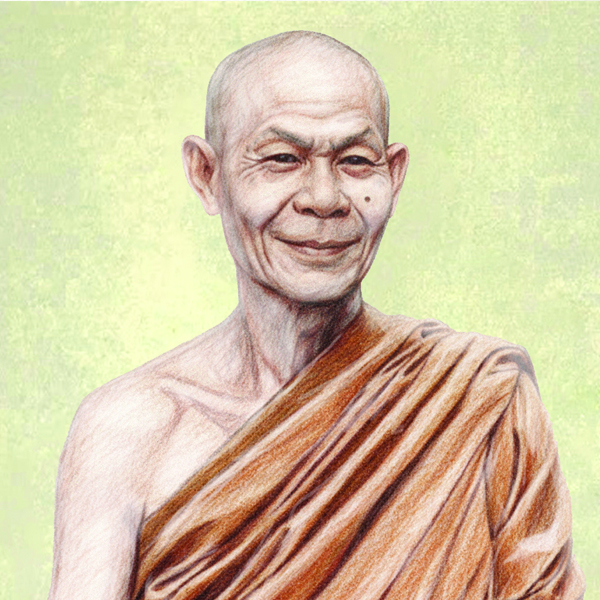
Note from the Translator
I am simply a practitioner who wishes only to preserve the teachings of Thailand’s noble monks. I have chosen a literal translation so that international readers receive the same essence and full content of every sentence as Thai readers do, without summarizing or adding personal interpretations. Regardless of whether the doctrines herein are "right" or "wrong" in your view, I kindly ask you to use your own wisdom and judgment to reflect upon them.
If you have any suggestions or find any errors where the translation does not match the original Thai text, please let me know. I would be most grateful for your feedback and will update the text to be as accurate as possible. Thank you.
A Spanish version of this article is available here: ESPAÑOL
If one considers the state of being human in the final point mentioned—that is, during the period when humans possess cruelty, possess ruthlessness, disregarding the law and moral discipline, wanting to do anything and doing it arbitrarily according to one's whim, disregarding the trouble of others—at that moment, the body is human, but the mind is an animal. Forests and wilderness have been completely cleared and laid bare by humans. The ancestors of animals have been hunted and entirely slaughtered by humans. The consciousness of animals has no place to be born because their parents are gone. Whenever the human mind turns into an animal, the consciousness of the animal seizes the opportunity to be born at that moment.
Welcome to The Abandoned Forest Temple... a tranquil space where the timeless teachings of the forest masters of Thailand are shared with the world in English and Spanish.
Let us take you back to the year 1992, on a quiet and peaceful afternoon at Wat Pa Salawan in Nakhon Ratchasima Province. Please set aside any heavy burdens in your mind and the stress from work, take a seat to rest in the open courtyard, and listen to the Dhamma with Luang Por Phuth Thaniyo. You can listen to this Dhamma discourse simply to relax, or if put into practice, it will bring immense benefit. Come, let us listen to the Dhamma together.
The Nature of Dhamma and the States of the Human Mind
At this following opportunity, it is time to listen to the Dhamma. Listening to the Dhamma is listening to one's own Mind (Citta). The mind is the leader, the mind is the master, the Body (Kāya) is the servant. Everything is accomplished by the mind. Merit (Puñña) arises at the mind, Demerit (Pāpa) arises at the mind, good arises at the mind, evil arises at the mind. Therefore, it is necessary to train the mind. If the mind is not good, if the mind is spoiled, the thinking will not be good because the mind thinks poorly. Speaking will not be good, acting will not be good, because the source is spoiled, the end result is consequently spoiled as well. But if the mind is good, the mind possesses Moral Discipline (Sīla), the mind possesses Dhamma, then speaking is good, acting is good, all is entirely good. Therefore, one must necessarily train the mind. Before speaking about the principles and methods of training the mind, the matter of the word Dhamma will be discussed.
Whenever one goes to listen to sermons anywhere, the monks would say, "Now, I shall expound the Dhamma, the teachings of the Supreme Lord Buddha." As one listens continuously, sometimes one might feel a slight sense of neglect, thinking that the Dhamma belongs only to the Lord Buddha, and we possess none. If the Dhamma belonged only to the Lord Buddha, since He reached Final Extinguishment (Parinibbāna) 2,528 years ago, the Dhamma would likely no longer remain, for it would have disappeared along with the day of the Lord Buddha's final extinguishment. Because the Dhamma belongs to the Lord Buddha, and we have none, where will we obtain the Dhamma from? One might understand it in this way. But to establish an understanding for the lay listeners, one should establish the understanding like this: The word Dhamma is divided into 2 categories.
Category 1 is the Dhamma that has existed since ancient, original times. This is our body and mind. The Lord Buddha also possessed a body and a mind. The Dhamma referred to as the body and mind is something that existed before the Lord Buddha was born. The parents of the Lord Buddha also possessed a body and a mind. Therefore, the Dhamma existed prior to the Lord Buddha. This aspect of the Dhamma, simply put, is called "Natural Phenomenon (Sabhāvadhamma)". It is called natural phenomenon because it is something that must proceed according to the laws of nature. The laws of nature mostly consist of Impermanence (Anicca), not being permanent; Suffering (Dukkha), being unable to endure; and Non-self (Anattā), not being an entity of its own. What can be clearly seen is birth, aging, sickness, and death. Birth, aging, sickness, and death proceed according to the laws of nature because everyone born must age, must get sick, and must die. Birth, aging, sickness, and death demonstrate change. When initially born, one is still a small child, and then grows until fully grown. When fully grown, one gradually ages... until sickness and death eventually occur as the end. This is the change of natural phenomenon, which proceeds according to the laws of nature, called Anicca, being impermanent; Dukkha, being suffering; Anattā, not being an entity of its own. This Dhamma does not belong to the Lord Buddha alone; we possess it as well. But when He attained Buddhahood, it was because He relied on the body and mind as objects of knowing, and trained Mindfulness (Sati) and Clear Comprehension (Sampajañña) to have strong power to keep pace with various events, which are the changes as mentioned, until He was able to make the mind remain stable, unwavering, and unswayed by things that naturally occur in such a way. This caused Him to be completely free from suffering, free from sorrow, free from disease, free from danger, ending birth and ending existence, which is entering Extinguishment (Nibbāna).
This is the Dhamma that serves as the Mental Object (Ārammaṇa)—the object of knowing for the Lord Buddha's mind. In the position where we are also disciples of the Lord Buddha, we come to train our own minds to possess profound knowledge and realization of the truth in the Dhamma that is the natural phenomenon, which is this body and mind of ours. Therefore, the training ground to make the mind efficient, to elevate oneself above the world and all anxieties, relies on the body and mind as the mainstay. It cannot depart from them. Even if we are able to know and see external things, no matter how much we know about them, if one does not know the matter of the body and mind, there is no way to escape from suffering. Therefore, knowing the matter of the body and mind is the path that allows the practitioner to escape from the mass of suffering. This is the natural phenomenon aspect of the Dhamma.
Category 2 is the Dhamma that is the teaching. This refers to the rules or regulations that act as a skillful means to train and develop the mind, including the body and speech, to have greater efficiency. These rules and regulations, as commonly known, are moral discipline, Concentration (Samādhi), and Wisdom (Paññā), which are the rules or regulations one must follow. The objective lies in abandoning evil, practicing good, and making the mind pure and clean, which is generally referred to as moral discipline, concentration, and wisdom. This is the direct teaching of the Lord Buddha. Regarding these 3 major principles of teaching, if the Lord Buddha had not arisen in the world, one would not have heard the words moral discipline, concentration, and wisdom. Even if one had heard or listened to them somewhat, it would be fragmented and not orderly.
The 5 Precepts are the worldly moral discipline. The 8 Precepts are the moral discipline that arose during the time of the Lord Buddha. The 227 Precepts arose during the time there was a Lord Buddha. If there were no Lord Buddha, these 2 categories of moral discipline would not exist. But the 5 Precepts are ancient, original moral discipline. Whether the Buddhist religion exists or not, there are still people observing the 5 Precepts remaining in the world to some extent, never completely disappearing. Therefore, the 5 Precepts are elevated to be Human Virtue (Manussadhamma), meaning they are the virtue for human beings. The 5 Precepts, if spoken of by rule, are the moral principles ensuring the safety of society. They are the moral principles that adjust the foundation of human completeness. A human being who can be fully complete must possess the 5 Precepts and the 10 Wholesome Courses of Action (Kusalakammapatha). If that is so, why are human beings currently being born in such great numbers? To resolve this doubt, the levels of being human will be categorized.
Each human being has the opportunity to exist in 4 different states. At any moment when the mind possesses moral discipline and Dhamma, possesses compassion, possesses generosity, and has moral discipline and Dhamma as the guiding principle of practice, at that moment, the body is human, and the mind is also human. But if at any moment the mind possesses Moral Shame (Hiri) and Moral Dread (Ottappa)—that is, the shame towards demerit and the fear towards demerit—not daring to commit evil both in secret and in the open, at that moment, the body is human, but the mind is a Celestial Being (Deva). But if at any moment the mind possesses weariness, discouragement, and irresponsibility, neglecting duties, letting life pass by pointlessly without benefit, not doing any good deeds, at that moment, the body is human, but the mind is a Hungry Ghost (Peta). If at any moment the mind possesses cruelty, completely disregarding the law and moral discipline, wanting to do anything and doing it arbitrarily according to one's whim, depending entirely on the emotions of anger and lust, not considering the happiness and suffering of others, aiming only to do as one pleases, with a cruel mind devoid of moral discipline and Dhamma, at that moment, the body is human, but the mind is an Animal (Tiracchāna).
The question of why nowadays people are born in such great numbers... The people whose Consciousness (Viññāṇa) comes to be born as human beings—perhaps there are abundantly many people practicing the 5 Precepts and the 10 wholesome courses of action, hence humans are born in such great numbers? This is a question that many people frequently ask.
If one considers the state of being human in the final point mentioned—that is, during the period when humans possess cruelty, possess ruthlessness, disregarding the law and moral discipline, wanting to do anything and doing it arbitrarily according to one's whim, disregarding the trouble of others—at that moment, the body is human, but the mind is an animal. Forests and wilderness have been completely cleared and laid bare by humans. The ancestors of animals have been hunted and entirely slaughtered by humans. The consciousness of animals has no place to be born because their parents are gone. Whenever the human mind turns into an animal, the consciousness of the animal seizes the opportunity to be born at that moment.
The Foundation of Sīla and the Beginning of "Buddho" Repetition
In truth, we are so proud of being human, but we forget to reflect upon and consider our own human state in the present. Therefore, the matter of the 5 Precepts is a crucial matter, acting as the master blueprint of all moral disciplines. One who will cultivate Perfections (Pāramī) to successfully attain Path, Fruition, and Nirvana (Magga-phala-nibbāna) must adjust the foundation of human completeness, which simply means possessing pure and clean 5 Precepts. The 5 Precepts that ensure the safety of society—that is, human society. When human beings set a firm resolution in the mind that they will not kill, will not oppress, will not abuse fellow human beings by any means whatsoever—although there might be a necessity to kill animals for food to sustain livelihood—the 5 Precepts that exist at the human level are sufficient to be the virtue that ensures the safety of society. When we adjust our human foundation or possess precepts at the human level, we cannot kill, oppress, or abuse one another, nor can we envy or despise each other. When one trains the mind to be steadfast towards fellow human beings, by human nature, one naturally possesses a high mind as a foundation. Compassion will naturally spread and cover even animals. Even animals, one will not be able to kill. This training to observe the 5 Precepts must be trained step by step.
Now, coming to speak about Buddhists who observe the precepts in order to practice concentration and mental development (Bhāvanā), to attain Path, Fruition, and Nirvana. No matter what type of person, whether Ascetic (Pabbajita) or Householder (Gahaṭṭha), if this foundational 5 Precepts are not complete, even if one undertakes the 8 Precepts, 10 Precepts, or 227 Precepts as the principle of practice, if any of the 5 Precepts is flawed, the 8 Precepts, 10 Precepts, and 227 Precepts will also collapse and cannot be maintained. Because virtues higher than the five precepts can only be practiced by those who are truly human, the five precepts are of utmost importance. There are people who ask whether a person who is a householder, not ordained, observing merely the 5 Precepts, is capable of practicing the Dhamma and attaining Path, Fruition, and Nirvana. To this, the answer is confirmed as 'yes.' Visakha, the Great Female Lay Follower (Upāsikā), attained the state of Stream-enterer (Sotāpanna) at the age of 7. At the age of 16, she married and had a family. Those who marry and have a family perfectly well possess merely the 5 Precepts. If one were to take the 8 Precepts, one could not live with a family; one would have to sleep separately. See!!! That’s how it is. Therefore, Visakha, the female lay follower, is the confirming evidence that one who possesses merely the 5 Precepts is capable of attaining Path, Fruition, and Nirvana. Visakha possessed the 5 Precepts when she attained the state of Sotāpanna, but still had to wait to attend upon another Lord Buddha, Sri Ariya Metteyya, the final one. And then Visakha will succeed in becoming an Accomplished One (Arahant), entering Extinguishment (Nibbāna).
Now, to speak of the principles of Dhamma practice. The matter of training to perform concentration is something one has heard, listened to, and practiced quite sufficiently. But the matter of concentration is a general, public principle across all doctrines and religions. Other religions can also practice concentration, not just the Buddhist religion. The Brahman religion also has concentration, or cults that believe in spirit possession must also rely on concentration as a principle, as a foundation. At present, people in foreign countries, such as Russia, for instance, are practicing concentration as a matter of life and death. But the practice of concentration in other doctrines and religions has a different objective from the Buddhist religion. The Buddhist religion practices concentration with the aspiration to attain extinguishment. Therefore, one begins with being a person possessing moral discipline, purifying the body and speech, making them clean and free from offenses that might be committed through body and speech. For example, as all lay followers have already undertaken the 8 Precepts, this is adjusting the physical and verbal foundations to possess purity and cleanliness. When one has the intention to abstain according to the rules of those respective precepts completely, one's moral discipline becomes pure and clean from that moment onward. When all of you possess good, pure, and clean moral discipline, it is then appropriate to train in concentration.
The method for practicing meditation today that will be recommended is meditation through mental repetition (Parikamma Bhāvanā) and establishing mindfulness to continuously observe one's own mental processes, alternating between the two. Therefore... you are invited to prepare to sit in concentration at this opportunity.
Sitting in concentration according to the standard model, one places the right leg over the left leg, the right hand over the left hand, sets the body straight, and establishes mindfulness firmly. Whoever will sit in whatever posture, this is a methodology. But if one is not adept at sitting cross-legged, one can sit with legs folded to one side or in any posture, because concentration is an action of the mind, not about sitting, standing, walking, or lying down. Establishing the mind to recite mental development and gaze closely at one's own mind is called the training of concentration. When you have finished preparing to sit in concentration, please incline the mind, incline the heart, to recollect the virtues of the Lord Buddha as "Buddho...Dhammo...Saṅgho" 3 times. Then incline the mind, incline the heart to think that the Lord Buddha, the Dhamma, and the Sangha are already present within our minds and hearts. Because at this moment, there is an awareness of right and wrong within the mind and heart. The awareness of right and wrong is the action of Buddhahood. Maintaining such awareness is called having the Dhamma in the heart. Exercising mindfulness, caution, and guarding, constantly controlling our mind to recite "Buddho... Buddho... Buddho..." in the heart, is called the training of mindfulness, which is the action of the Sangha, those who practice well and practice rightly. Therefore, the Lord Buddha, the Dhamma, and the Sangha are already within your mind and heart. Please compose yourself, establish awareness down at your own mind. Wherever the feeling is, the mind is there. Then establish the mind to think of reciting the mental development "Buddho... Buddho... Buddho..." continuously like that. Or, one may think "Bud" with the in-breath and "dho" with the out-breath as one pleases.
While reciting mental development, your duty is only to think of "Buddho". There is no right to go think about or analyze other things. Thoughts about when the mind will become peaceful do not need to be thought. When one will know or see anything does not need to be thought. And do not suppress the mind to force it to be peaceful through methods of calming the mind. Your duty is merely to think "Buddho... Buddho..." gently. Do not press or suppress the feeling. For those who recite "Buddho", "Bud" with the in-breath and "dho" with the out-breath, establish the focal point at the tip of the nose, right where the breath passes out and passes in. If one does not observe the breath, then simply think "Buddho... Buddho..." as a single word. Think of it gently, similar to thinking of it playfully without desiring any return, but think of it without stopping. Do not leave empty spaces, do not let it be vacant. And closely observe the nature of one's own mind. When we think "Buddho... Buddho... Buddho..." intensely, we will feel that we are not intentionally thinking it, but our mind thinks "Buddho" on its own. Thinking "Buddho" until our mind thinks "Buddho" on its own without intention. If our mind thinks "Buddho" on its own without intention, it shows that... the mind is beginning to act on its own. When the mind thinks of "Buddho" on its own, mindfulness remains with "Buddho", it just happens on its own. When we think "Buddho" on our own without intention, it shows that our mind is starting to hold onto "Buddho" as a refuge. Then continue thinking "Buddho". Do not suppress the mind to make it peaceful. Do not dress it up or adjust anything at all. Merely think "Buddho... Buddho... Buddho... Buddho..." continuously. When the mind thinks "Buddho" on its own without intention, whether the mind becomes peaceful or not, there is no need to be concerned. Simply establish the designation that our mind thinks "Buddho" on its own, and we are beginning to get results from the mental development.
Navigating Nimittas and Turning Thoughts into Vipassanā
When the mind thinks "Buddho" on its own without intention for a long time, the feeling of bodily lightness arises, the feeling of mental lightness arises. The body experiences peace from Painful Feeling (Dukkhavedanā). The mind is peaceful from other mental objects that would interfere, focusing entirely on "Buddho" alone. And when the mind becomes deeply absorbed and saturated in the word "Buddho" intensely, the mind will gradually become peaceful little by little. When it has become peaceful, sometimes the mind might stop, become empty, and then remain still and quiet. There will be a slight brightness. When it is like that, let the meditator establish awareness solely at the knowing entity. Do not let any sudden surprise arise. If the body exhibits shaking symptoms, simply maintain awareness of the mind. If the body sways... maintain mindfulness and simply keep knowing. However the body may be, simply maintain awareness. When the mind becomes bright... sending its current outwards, sometimes one might see various Mental Signs (Nimitta). Simply maintain awareness of the mind; do not pay attention to those mental signs. Even if any knowledge arises as words, simply maintain awareness of the mind; do not pay attention to the knowledge that arises. Establish awareness merely as knowing. Having known... then let it go. If, during this period, the mind generates thoughts, if one observes that the thought that arises makes the mind feel light, let it think. But we maintain mindfulness and establish awareness continuously following it. Set the designation that the thought that arises on its own... is the mental object for the knowing of the mind. And then we maintain mindfulness and establish awareness following that thought. Do not forbid the thought and do not pull it back to "Buddho" again. Let it think until the end of its duration, but we maintain mindfulness and establish awareness continuously following it. Gaze at it, just like we stare intently at a certain object like that, and then establish awareness following it. While establishing awareness following it again and again... at first we might intentionally establish awareness following it. But when we practice until fluent and skillful, until mindfulness follows the knowing automatically on its own, without us intending it, that indicates that our mental development is starting to yield results.
When we establish the mind to follow and know the thoughts that arise and pass away within the mind. Firstly, we will know that our mind has thoughts, has mental objects. Secondly, we will see that the mind has thoughts; thoughts arise and then pass away... arise and then pass away. When we have mindfulness and clear comprehension, establishing a gaze at the thoughts arising and passing away in the present. When mindfulness and clear comprehension gain better strength, we will know the impermanence of those thoughts. When the mind clearly perceives the impermanence of those thoughts, the mind has already begun to embark on Insight (Vipassanā) practice. Because insight... naturally designates the impermanence of the conditions appearing in the present, which is the thoughts that arise and pass away... arise and pass away. When the mind knows the change in the thoughts, assigning significance to the thoughts as impermanent things, we then know the Dhamma, see the Dhamma in terms of the Three Characteristics (Tilakkhaṇa), which is impermanence, the impermanence of the thoughts themselves.
When the mind has thoughts arising and passing away unceasingly, and we maintain mindfulness establishing awareness following them. Besides knowing the impermanence of the thoughts, we will see that our mind has thoughts. When the mind has a mental object, does that mental object nudge us to experience pleasure or displeasure in any way? If the mind thinks up anything, it attaches to that thought. The result that arises will be 2 things: pleasure, which is called Desirable Object (Iṭṭhārammaṇa), and displeasure, which is called Undesirable Object (Aniṭṭhārammaṇa). When the mind establishes awareness watching the pleasure and displeasure arising with the mind at all times, the mind will naturally know that in this mind of ours, there are Defilements (Kilesa)—pleasure is Craving for Sensual Pleasures (Kāmataṇhā), displeasure is Craving for Non-existence (Vibhavataṇhā). If our mind attaches to the 2 things, which are pleasure and displeasure, it is Craving for Existence (Bhavataṇhā). When the mind has craving for sensual pleasures, craving for existence, and craving for non-existence, suffering naturally arises. When suffering arises, the one with mindfulness and clear comprehension establishing awareness watching the suffering in one's own mind, the mind will naturally know that this is the "Noble Truth (Ariyasacca) of Suffering"—that is, this very suffering. When there is mindfulness establishing awareness watching the suffering in the mind at all times, the mind naturally knows that this is suffering, which is a real thing arising in the mind. Upon knowing, it accepts the state of reality that this is suffering, born from the cause, which is craving for sensual pleasures, craving for existence, and craving for non-existence. The meditator will then know the noble truth. This establishing of the mind to investigate and watch the mental objects during practice should be established in this way.
The Stages of Jhāna and Transitioning Samādhi into Insight
If, supposedly, we establish the mind reciting mental development... until the mind attaches to the recitation word, and peace arises as concentration, consisting of Initial Application (Vitakka), which is the mind thinking of the mental object on its own; Sustained Application (Vicāra), which is the mind focusing on and knowing that mental object; and then Rapture (Pīti), Happiness (Sukha), and peace arise. Concentration that consists of the factors: initial application, sustained application, rapture, happiness, and One-pointedness (Ekaggatā), is referred to as the mind being in the 1st stage of Absorption (Jhāna). When the mind becomes peaceful and refined further, the mind does not think of anything, remaining still, bright, and quiet, with only rapture, happiness, and one-pointedness appearing. The mind is in the 2nd stage of absorption. When the symptoms of rapture disappear—that is, the goosebumps and the sense of fullness disappear—leaving only happiness and peace, which is one-pointedness appearing. The mind is in the 3rd stage of absorption.
When the mind becomes peaceful and refined further, the breath disappears, the body disappears, leaving only the peaceful mind remaining still and prominent as a single orb, and the mind is aware solely at the mind alone. There are no symptoms of feelings or thoughts whatsoever. Happiness is not there, suffering is not there, pleasure and displeasure are not there. There is only impartial neutrality. Neutral without happiness, neutral without suffering, neutral without pleasure, neutral without displeasure. There is only the knowing entity, the "Buddho" entity appearing luminous, appearing still. This is the mind in the 4th stage of absorption.
When the mind is in the 4th stage of absorption, the body has disappeared, the breath has disappeared, leaving only the mind, which is Mentality (Nāmadhamma), appearing clearly prominent as a single orb. The mind experiences only still brightness. Symptoms of various thoughts do not arise at that moment. And the mind knows merely as knowing. Knowing merely the peace, knowing merely the neutrality of the mind. Wisdom and knowledge have not yet arisen, but it is a foundation that builds the energy of the mind. When the mind is peaceful in this stage of concentration for a long time and frequently, it causes our mind to generate energy, which is concentration, stability, and mindfulness and clear comprehension gradually improving somewhat. When the practitioner makes the mind peaceful to this extent, once the mind withdraws from concentration, do not be pleased and satisfied merely with peace alone. Most practitioners, once they make the mind peaceful in concentration, as the mind withdraws from concentration, because of the gladness over the mind's peace in concentration, as soon as they regain awareness, they jump up, bound about, and rise from the meditation seat immediately. This is practicing incorrectly. If one persists in doing this, the mind will only attain still peace as concentration alone. Wisdom and knowledge will not arise. The method of practice concerning this matter should be done like this: When the mind is well pacified until the body disappears, once the mind withdraws from concentration, as soon as it senses that there is only the body, the mind immediately generates thoughts. The meditator must absolutely not rush to quickly leave the meditation seat. Intentionally establish mindfulness to follow and know those various thoughts continuously, as mentioned in the beginning. If practiced in this way, the stage of your mind will step up to the stage of insight quickly. Because once the mind has passed through still peace, when any thought arises, the thinking will be unwavering. Whatever it thinks about, it will know clearly, because mindfulness is better. When mindfulness is better, for the thoughts that are thought up, the mind has mindfulness continuously following and knowing the thoughts. When one establishes mindfulness following and knowing the thoughts arising and passing away, arising and passing away, arising and passing away, the result is that it will cause the practitioner to know the three characteristics, which are impermanence, suffering, and non-self. That is, knowing that thoughts naturally have arising, persisting, and passing away. Besides knowing the three characteristics, which are impermanence, suffering, and non-self, one must also know the Truth of Suffering (Dukkhasacca), because only thoughts will nudge us to experience happiness and suffering, to experience pleasure, to experience displeasure. When we establish the mind, maintaining mindfulness following and knowing relentlessly, we will know the three characteristics, know the noble truth of suffering that is to arise with the mind. This is the path of practice that teachers have previously led us to undertake.
The reason for giving this guidance and warning is because there are problems. Practitioners who are able to make their minds have peaceful, still concentration until the body disappears, but when practicing for a long time, the mind does not easily become peaceful anymore. As soon as the mind is established, sensing a slight peace, thoughts keep drifting and wandering, on and on. So, we misunderstand that our own mind is restless, preoccupied only with trying to stop the thoughts. At that moment, the mind is beginning to work, wisdom is beginning to arise, thoughts are beginning to become agile. When the mind has energy, it must think unceasingly. When the practitioner does not understand, misunderstanding that their own mind is restless, preoccupied only with stopping the thoughts, it goes against the feeling of natural occurrence. When the mind is stopped, it immediately turns into restlessness. Therefore, the method of practice is that, when establishing the mind to recite mental development "Buddho, Buddho, Buddho", before even reaching 10 words, the mind begins to have symptoms of sudden sinking peace slightly. As soon as it feels peaceful, thoughts arise, wandering, wandering, wandering. Quickly establish the mind to maintain mindfulness following and knowing the thoughts immediately. See!!! It should be practiced like this.
Daily Mindfulness, True Fruits of Practice, and the Natural Elements
Therefore, while we are practicing regarding the recitation of mental development. If our mind stays with the recitation, such as "Buddho, Buddho, Buddho" for instance, it will recite "Buddho" all day, all night, whether standing, walking, sitting, sleeping, eating, drinking, doing, speaking, thinking. It recites "Buddho" continuously without stopping. Let it recite just like that, do not forbid it. Because at this stage, it is beginning to act on its own by nature. Mental development in the beginning requires training our mind to have an anchor initially. Do not yet try to eradicate all defilements; let the mind have something to hold onto as a foundation. If our mind attaches to the word "Buddho" tightly, every breath it thinks only of "Buddho" alone. When it thinks only of one single thing, it loses anxiety regarding other things. Once it is attached to "Buddho", it does not pay attention to other matters. When the mind clings to "Buddho" as the only thing, it is an adequately comfortable state because the mind is not chaotic. While the mind is attached to "Buddho" as the single thing, the meditator should know that we are beginning to attain the 1st and 2nd factors of absorption. The mind thinks of "Buddho" on its own, and then establishes awareness of "Buddho" on its own automatically. This indicates that the mind is starting to be able to enter concentration. Therefore... if our mind focuses and recites "Buddho, Buddho, Buddho" as the only thing, even if the symptoms of peace consisting of rapture and happiness do not arise, let it think, let it recite its mental development continuously like that. When it thinks, recites, and develops mentally unceasingly, eventually the peace that possesses rapture, happiness, and the oneness of the mind will naturally arise. This is the practice concerning mental repetition.
If anyone is to maintain mindfulness establishing the knowing of thoughts, it should be trained until fluent, until our mind has mindfulness and clear comprehension following and knowing our own thoughts automatically. When it is like that, the mental development is beginning to yield results. Another principle of mental development that practitioners must not forget is the establishing of the mind to observe the mind, knowing at the mind, and then attempting to maintain clear awareness, following and knowing while standing, walking, sitting, sleeping, eating, drinking, doing, speaking, thinking, in every breath. This is the foundation of the practice. Because establishing the mind to pay attention to standing, walking, sitting, sleeping, eating, drinking, doing, speaking, and thinking is an expedient method to train the mind to have restraint, and it is a way to pay more attention to oneself. When we pay more attention to ourselves, we naturally know our own flaws, or know our own excesses, and know what we lack, what we have in excess. Then we will be able to adjust it to be just right, which is called the "Middle Way (Majjhimāpaṭipadā)". This is the principle of practice. If we are to only close our eyes and sit with "Buddho, Buddho, Buddho", and once leaving "Buddho", leaving the sitting concentration, we let our mind and heart go arbitrarily according to whim, without restraint and mindfulness constantly watching and controlling it, it is not worth the value of sitting in concentration for just 30 minutes or 1 hour. Because during the time we let our mind go arbitrarily according to whim, which is much longer, how can it resist the power of defilements and mental objects? Therefore... we should properly maintain mindfulness, establishing awareness following and knowing standing, walking, sitting, sleeping, eating, drinking, doing, speaking, thinking, in every breath.
Establishing the mind. If, supposedly, we are to watch our body... We establish awareness merely at the mind alone. When we step and walk, we do not need to say 'walking, walking'. When we stand, we do not need to say 'standing, standing'. When sitting, when sleeping, we do not need to append '-ing' to those actions. Merely establish awareness solely at the mind alone. When the body and mind still have a relationship together, the mind is the knowing entity governing the body. The body will walk, the mind commands, right? The body will stop and stand, the mind commands, right? The body will sit, the mind commands, right? The body will sleep, the mind commands it to sleep, right? The body will speak, the mind commands it to speak, right? The body will drink, will do, the mind is the commander. Especially thoughts and thinking, the mind is the thinker. When we intentionally establish awareness at every moment of the mind, why wouldn't we know the truth of those things? There is no need to find anything to make it excessively complicated until it's a mess. Because as long as the body and mind still have a relationship together, whichever way the body will move, the mind is the knower of it all. Why wouldn't it know? Because it is the one commanding us to do, to speak, and to think. Being so, it knows everything. Therefore, for us to come and establish the mind, knowing solely at the mind alone, we are able to know everything that is related to the body. By the nature of the mind, if it separates from the body and stays solely by itself without a physical body, it has no thoughts or thinking, there is only the knowing entity remaining still. Symptoms of thinking do not exist. Therefore, all practitioners, if supposedly anyone lacks the capacity for broad contemplation, merely establish the mind reciting "Buddho" all day until night, in every breath, except for the time we think, we speak. If we think, we speak, we establish mindfulness knowing alongside the thinking and speaking. Whenever empty from thinking and speaking, we think of our "Buddho... Buddho..." immediately. Think until our mind becomes fluent with the thinking, until our mind thinks "Buddho" on its own both waking and sleeping. Being so, your mental development is beginning to yield good results. It yields good results exactly in that, the nature of the mind, if there is an object to know, if mindfulness has an object to recollect, the energy of mindfulness and clear comprehension improves.
Training and practicing like this, the point to observe regarding what we have gained, there is another thing that practitioners should observe and understand. If we train and practice, and we generate faith, wanting to practice. If on any day we do not sit and practice, that day we cannot sleep. This indicates that you have attained the Power of Faith (Saddhābala). When you have attained the Power of Faith, you want to practice, you have attained Effort (Viriya). When you have Effort, you have intention, which is mindfulness. When having mindfulness, there is confidence, which is concentration. When there is confidence, which is concentration, you possess wisdom sufficient to think and search for the path in practice. See!! One should train to observe like this. Do not establish the designation that mental development must result in seeing heaven, seeing hell, seeing matters of Nirvana. That mental development must result in seeing ghosts, demons, spirits, celestial beings, Indra, Brahma, Yama, giants. These things, even if known or seen, are merely mental objects of the mind, not magnificent good things. So... where shall we establish the designation? Establish the designation exactly at knowing that this is our mind. Is our mind aligned with the Dhamma? Is our mind impartial? Is our mind absorbed in the virtues of the Lord Buddha, the Dhamma, and the Sangha? When having withdrawn from concentration, does our mind have the intention to abstain from evil, practice good? Is there honesty and integrity toward oneself? Is there honesty and integrity toward the group and toward the family? Look exactly here. If anyone practices mental development and becomes weary of their family, wanting to run away and ordain, Wrong View (Micchādiṭṭhi) is starting to consume them. If anyone's mental development reaches good concentration and they become weary of work and duties, wanting to abandon work and duties and run away, that indicates a fault is beginning to arise. If anyone is proficient at mental development, supposedly if a teacher has a disciple, they love the disciple more. The disciple is proficient at mental development, they love the teacher, respect the teacher more. Husband and wife are proficient at mental development, they love each other even more. Loving the children, loving the family, knowing how to be economical, knowing various things, knowing what is appropriate and inappropriate even better. This can thus be called mental development that yields good results, and one is a meditator who does not forget the home, does not forget our land.
If we only sit with our eyes closed practicing mental development exclusively, without considering the nation, our land as well, when our nation or our land disintegrates, where on earth will we go to sit with our eyes closed practicing mental development? Because our nation or land possesses everything we need. Our body is the Four Primary Elements (Catudhātu): earth, water, wind, fire. It naturally relies on the four primary elements: earth, water, wind, fire from the outside to come in and sustain it. The food consumed bite by bite is the earth element, obtained from the land. The water consumed is the water element, obtained from the land. The wind breathed in is the wind element, obtained from the outside wind. The warmth in the body is obtained from the sunlight. Internal elements and external elements naturally have an indispensable relationship with one another. Therefore, the meditator should not forget nature, which is our land.
Alright, having spoken the Dhamma sufficiently as a guiding thought for all of you listeners, it is seen as appropriate for the time. Therefore, I ask to conclude with this.