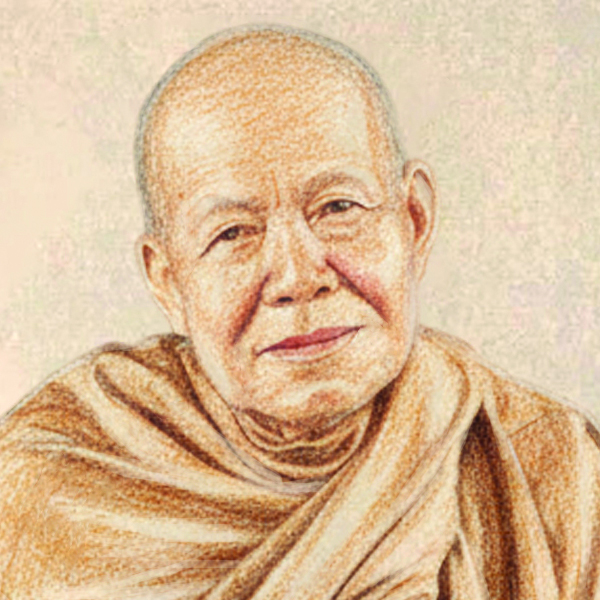
Note from the Translator
I am simply a practitioner who wishes only to preserve the teachings of Thailand’s noble monks. I have chosen a literal translation so that international readers receive the same essence and full content of every sentence as Thai readers do, without summarizing or adding personal interpretations. Regardless of whether the doctrines herein are "right" or "wrong" in your view, I kindly ask you to use your own wisdom and judgment to reflect upon them.
If you have any suggestions or find any errors where the translation does not match the original Thai text, please let me know. I would be most grateful for your feedback and will update the text to be as accurate as possible. Thank you.
A Spanish version of this article is available here: ESPAÑOL
Death... it is an even more severe danger to this life because death comes to cut one off, causing separation from everything. Oh!! Having a body, the mind then is possessive of it as one's own. Now, when death arrives, one is forced to leave and be separated. Some feel regret and attachment, not wanting to be parted from this body, but they are forced to be separated because the supporting merit and karma from the past have reached their end.
Today, I will take you on a journey back in time to listen to a Dhamma sermon at the main hall (Sala Kan Parian) after the evening chanting on October 17, 1989, at Wat Aranya Banphot in Sri Chiang Mai District, Nong Khai Province. We will be listening to the teachings of Ajahn Rian Varalapho, a highly revered and noble monk of exemplary practice, on the topic of 'Craving'
Craving and the Mind
From now on, one should set one’s intention well. At this time, we come together to practice Effort (Viriya). A person who is alert, fears Suffering (Dukkha), that is the one... who will possess diligence and perseverance. If one still does not see the suffering within this Round of Rebirth (Vaṭṭasaṃsāra), that person will not strive or make an effort; they will remain heedless because... this suffering arises from a cause. If there is no cause, there is no suffering. Therefore, the Buddha taught that Craving (Taṇhā) is the cause for the arising of suffering. Now, regarding this craving, who is the one who creates it? The problem lies right here... Hmm... it is the Mind (Citta) that creates craving; that is how it can exist. If the mind does not create it, that craving does not exist. Whoever does not train their own mind to be firmly established in Merit (Puñña), in Wholesomeness (Kusala), that person is... overwhelmed by craving because this craving has followed this mind throughout the round of rebirth for countless ages.
Now, in the Present (Paccuppanna), when one is inclined toward merit and wholesomeness, having mind with clear Conviction (Saddhā) and confidence in merit and wholesomeness—believing they can lead one to be free from suffering—then... one strives in merit and wholesomeness without retreat. Craving then finds no opening. It finds no opening to overwhelm the heart, causing the heart to decline from merit, from that noble virtue. Therefore, the thing that will suppress this craving—it lies in merit and wholesomeness. Any individual who is lazy in cultivating merit and wholesomeness—that person will constantly fall into being a slave to craving. It is the same for a monastic. If one is lazy in practicing effort both day and night, craving will surely have influence over the mind of that monastic. Craving inflames the mind; being distressed, one cannot remain. Upon disrobing, one becomes a slave to craving, becoming a deceptive philanderer, one who is greedy in Sensuality (Kāmaguṇa), even to the point of causing a person to lose their very personhood. For a person who allows craving to overwhelm the mind, if they are a householder, it leads them to commit Misconduct (Kāmesumicchācāra), which is called committing adultery with another's wife. Whether it be a man, or a woman committing adultery with another's husband, this is what is called sexual misconduct; it is called snatching away the beloved and cherished possessions of others. This... is indeed sinful and harmful.
The River That Is Never Full
And craving does not consist of only that; it is said that craving has as many as one hundred and eight varieties. Craving arises from the eye; craving arises from the ear; craving arises from the nose; craving arises from the tongue; craving arises from the body; craving arises from the mind. Craving has these six ways of arising. Then there is craving for Form (Rūpa), for Sound (Sadda), for Smell (Gandha), for Taste (Rasa), for Tangibility (Phoṭṭhabba), and for various Mental Objects (Dhammārammaṇa). Craving can be categorized as that which has passed in the past, that of the future which has not yet arrived, or craving that arises in the present. For example, some people recall past events as their object, and Lust (Rāga) and craving arise; restless striving and longing arise. When a person brings up certain matters regarding the future, it gives birth to craving and ambition: that in the future, one must do this, one must have that, one must obtain such fortune and status. Once it falls into desire, it erupts powerfully within the mind.
If one contemplates the present—in this present, one still has nothing, or what one already has—ah... when one still has nothing, one wants to have, wants to obtain, wants to be this, wants to be that; it wants all sorts of things. This... desire is thus said to have one hundred and eight or even a thousand forms. The Buddha therefore stated: “Natthi taṇhā samā nadī”—there is no river equal to craving. All rivers, great and small, flow and pour into the great ocean; the ocean never overflows its shores. In this same way... the craving and desire of us humans are perpetually deficient, just like the seawater itself.
The desire of us humans has no time of satisfaction; it never knows fulfillment. One who can be full is only one who comes to accumulate merit and wholesomeness within themselves, attempting to meditate and restrain the six Sense Faculties (Chaḷindriya) so they are firmly established within. That is to say, having Mindfulness and Clear Comprehension (Sati-sampajañña), gazing inward, reversing the mind’s current inward, to remain aware in the present, having mindfulness to forbid the mind from wandering restlessly into various lovable and pleasing mental objects. This indeed.. will be the cause that prevents craving from proliferating within the heart, by relying on reversing the mind’s current to be established in the present, not scattering the mind’s current to flow outward beyond measure. If it wants something, let it want only in moderation, wanting in accordance with one's own strength and ability to acquire it. Do not let it want beyond the measure of one's own strength, Vāsanā, Pāramī, or Mindfulness-Wisdom (Sati-Paññā). In this way, there will not be much suffering.
This craving that the Buddha taught refers to exceeding delight; he spoke of delight in form, sound, smell, taste, tangibility, and various mental objects—these sorts of things. Delighting beyond boundaries until one loses oneself, forgetting to make merit and wholesomeness, forgetting to do various good deeds, until one forgets both sin and merit. Craving lures the mind to commit sin, and one follows it, unable to remember at all that the sin will follow to take its toll, causing one to suffer both in the present and in the future; one cannot think of it at all. Craving has already dragged one away. This... these types of craving are the cause for the arising of suffering, being the reason for us humans to experience suffering in the Hell (Naraka) of Deprivation (Apāyabhūmi). Hmm...... may you all understand.
If speaking directly, it refers to the craving to kill living beings, to steal, to commit sexual misconduct, to engage in Lying (Musāvāda), to consume Intoxicants (Surāmeraya), marijuana, opium, heroin, or cigarettes—these things. Craving... the desire to do things that are sinful and harmful like these; this... is called the craving that will lead one to fall into hell, to become Hungry Ghosts (Peta), Demons (Asurakāya), or to be born into the realm of Animals (Tiracchāna)—it is because of this very type of craving. Understand this. If any individual can abandon this type of craving, then other cravings will not go so far as to lead them to fall into the deprivation of hell; it merely... leads them to wander, through birth, aging, sickness, and death in this world, that's all. Even that is still good! One who can abandon craving that leads to such sin and harm—that person is virtuous-hearted. If one is wicked-hearted, they cannot abandon that type of craving at all. One should be an individual endowed with Loving-kindness (Mettā-dhamma) and Compassion (Karuṇā-dhamma) always within the mind—having loving-kindness for oneself, thinking of oneself before all else: "How can it be... that I might be free from this suffering?"
What suffering? It is the suffering of aging, the suffering of sickness, the suffering of death—it is this. Another kind is mental suffering—suffering born of sorrow, grief, lamentation, distress, and despair because one's desires have not been fulfilled; one just remains suffering and grieving like this. This is what is called mental suffering. Physical suffering includes the suffering arising from the aging and decay of this body, and the suffering arising from illnesses that oppress this body, causing it to be in agony, preventing it from remaining normal. Illness and sickness are considered to be... a great deal of suffering. Each time there is pain, it impacts the mind violently, even to the point of weeping and various lamentations, struggling and being restless—that is it, the suffering born of illness and diseases that oppress this body.
But for an individual without Discernment (Vicāraṇā-ñāṇa), when there is suffering, they just let themselves suffer on like that; they do not contemplate at all: "How can it be... that I might be free from these sufferings?" They do not think of it. A person deluded, infatuated—suffering, they just undergo suffering, enduring the torture just like that. Oh, sometimes… they treat it with medicine and it recovers. Once the illness is gone and they have good strength, they forget everything. They forget the suffering of that sickness and pain; they do not bring it up to reflect and contemplate so that Disenchantment (Nibbidā) might arise. Therefore, they cannot escape the suffering in this world. We humans, you see, it is because we are not weary—we are not weary of suffering.
The Truth of the Physical Body
Death... it is an even more severe danger to this life because death comes to cut one off, causing separation from everything. Oh!! Having a body, the mind then is possessive of it as one's own. Now, when death arrives, one is forced to leave and be separated. Some feel regret and attachment, not wanting to be parted from this body, but they are forced to be separated because the supporting merit and karma from the past have reached their end; it cannot be sustained—this life, that is. This life exists because of merit and wholesomeness that each individual has brought from previous lives; it comes to support and maintain it. So, when that merit and karma are exhausted, it cannot remain established; it must disintegrate and be destroyed. It is like a lantern that relies on a wick and oil; once the fire is lit, it blazes. The fire burns the oil, and the oil dries up, on and on. The oil becomes less and less. When the oil is nearly gone, the light dims down accordingly.
Just as with that, so too is this. When merit and wholesomeness become less and less, to whatever extent, then this body loses its strength and power, becoming weak. Diseases oppress it, and it only deteriorates sequentially like that. When the time to truly die arrives, then... the Four Elements (Catu-dhātu) cease, they cease. The fire element ceases; there is little warmth in the body. If you feel it, it is cold.... from the soles of the feet upward; cold... from the head downward, gathering there at the chest. When the breath is exhausted, the warmth that was present at the chest also vanishes. The mind can no longer reside in this body at all; it must withdraw from this form and go.
This indeed is the characteristic of death. It gradually dies little by little. But even in the present, it is also gradually dying little by little—this body, that is. But people do not realize it. They do not realize that... they are dying continuously. Not until then!! Right when they are almost out of breath... only then will they say they are dying. Ah... that is how it is, the delusion and intoxication of us humans. For those who are not intoxicated, they must meditate... and constantly contemplate this body. Contemplate its Impermanence (Anicca); what is the characteristic of this body’s impermanence? Well, it is... constantly changing, on and on—just like this! That is the characteristic of impermanence. Whoever is observant will surely see the constant change of this body. The food that is eaten—the fire element digests it, refined parts nourishing various parts of this body, keeping it vitalized. Once those refined nutrients have nourished every part of this body, their life span ends. They turn into sweat, grime, feces, and urine, being discharged. This is the impermanence of this body; it is just like this.
And today, if no other food is brought in to nourish it, hunger arises and there is agitation. When the fire element has no food to burn and digest, it burns the stomach and intestines until they are scorched, prompting us to search for food and eat. Ah… once it reaches the stomach, the fire element digests it, causing that hunger and the heat in the stomach and intestines to be suppressed for a period of time. When it has finished digesting that food and there is no other food to digest, it burns the stomach and intestines again. It is just like this!! The impermanence of this body, you see, requires food from outside to be brought in to sustain it; only then can it barely subsist. If there is no food to nourish it, this body will waste away and, in the end, simply break apart and be destroyed.
While the body is... undergoing change, it impacts the mind. The mind then constantly experiences uncomfortable Feeling (Vedanā). Ah... it is like this. Hunger.. impacts the mind; thirst... impacts the mind. Ah… the need to defecate or urinate is suffering for the mind. It is suffering like this; this is what is called a daily disease, a daily suffering. When sleepy and unable to sleep—oh!!—the mind becomes weak and exhausted. Just like this, when working too hard—oh!!—there is suffering. It is the heart itself that suffers; it impacts this very heart. It is like that. Suffering (Dukkha)—when anything is impermanent, that thing is suffering; it is difficult to endure like this. Whatever is suffering, that thing is Non-self (Anattā), because it cannot be controlled. It does not go according to one’s wishes. If it could be controlled, who... would allow it to change and break apart?
Letting Go of Clinging
Regarding this body, no one wants it to be that way; it would not be so if it could be controlled. But it cannot be controlled at all. Therefore, the Buddha taught us to contemplate it, to see it as non-self—not belonging to us or to them. May you see clearly according to the truth in this way, so that delight and aversion toward this form and name may fade. For those whose sense faculties are still weak, they cannot yet abandon this Clinging (Upādāna). But it serves as the cause for abandoning this attachment, allowing it to gradually thin out, starting from... abstaining from various sins and harms. If anyone still sees this body as a self or a person, they will not yet be able to abandon certain sins because... it concerns their livelihood. They must find food to nourish this body, fearing that this body will break, cease, or deteriorate easily; they strive to find food to nourish it. No matter how sinful or harmful it may be, they do not care, because they cherish this body. They go and kill living beings, they steal, they cheat others of their possessions to make them their own.
This is it... humans commit sin because they hold firmly that this body is a self, a person, us, or them. If one sees clearly that it is not ours, then one chooses how to find food to nourish it. Whatever way of searching is not sinful or harmful, one does that. Whatever amount is obtained, one nourishes it with just that. If one does not commit sin yet finds food to nourish it, and it still breaks and ceases quickly, then so be it; if it is to break, let it break. For no matter how much sin one commits to nourish it, when the time comes and that old merit is exhausted, it dies... it cannot be sustained—this body, that is. One must contemplate to see it in that way. That is how a person can abandon sin; one must come down to seeing non-self, seeing that this body is not a self. Why, then, use this body and speech to commit sin? The one who experiences the suffering is the mind itself. What suffering would the body experience? Once it breaks and ceases, it just returns to being earth and water—the same old elements.
As for that sinful karma, it is what leads this mind to be born in the hell of deprivation, to endure torture way over there in hell! Ah… a clever mind, a mind that possesses wisdom, when it has seen clearly with Insight (Tilakkhaṇa-ñāṇa) like this, it can then abstain from those various sins and harms. One hurries to cultivate merit and wholesomeness, or knowing that one’s sense faculties and perfections are still weak, one attempts to accumulate merit and wholesomeness to become stronger and more mature in sequence. It must be like this. One who meditates, one who trains and develops the mind according to the teachings of the Buddha... will surely gain wisdom. At the very least, they can abandon sin and unwholesomeness from this mind, closing the doors to the four realms of deprivation, such as hell. Upon death, one does not go to the realms of deprivation but has Happy Destinations (Sugati) and the heavenly worlds as their destination. For those who have developed their faculties until they are mature and complete, they can abandon the Taints (Āsava-kilesa), severing them from their deep-seated nature. If not yet complete, then in part (Ekadesa); some can abandon them entirely. This is how the practice according to the Buddha’s teachings is considered a skillful means to abandon craving—the cause for the arising of suffering—step by step, as has been shown.