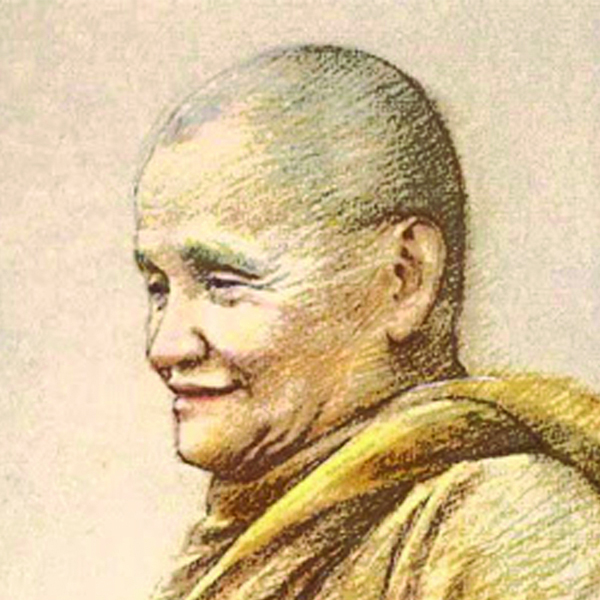
Note from the Translator
I am simply a practitioner who wishes only to preserve the teachings of Thailand’s noble monks. I have chosen a literal translation so that international readers receive the same essence and full content of every sentence as Thai readers do, without summarizing or adding personal interpretations. Regardless of whether the doctrines herein are "right" or "wrong" in your view, I kindly ask you to use your own wisdom and judgment to reflect upon them.
If you have any suggestions or find any errors where the translation does not match the original Thai text, please let me know. I would be most grateful for your feedback and will update the text to be as accurate as possible. Thank you.
This is an unofficial, literal translation made as a gift of Dhamma (Dhamma-dana) for free, non-profit distribution and study purposes. It aims to preserve the raw, spoken style of Ajahn Chah's original Thai Dhamma talk. It is not an official publication of Wat Nong Pah Pong.
A Spanish version of this article is available here: ESPAÑOL
We are all suffering, but we are 'unaware' of it.
Just by hearing a sound that we like, or dislike, it is 'suffering.'
Just by seeing something we like, or dislike, it is 'suffering.'
Why is the thing we like suffering?
Because the thing we like is also under the Law of the Three Characteristics—it must naturally cease. If we cling to that which we like, when it ceases, we 'suffer.'
And why are we unaware?
Because we have been habituated to 'clinging' since birth, until it has merged with us, until clinging becomes normal. But once we see that these things are suffering, we will only see things that impact the heart, and then they cease naturally.
Welcome to The Abandoned Forest Temple... a quiet space where the timeless teachings of the Forest Masters of Thailand are shared with the world in English and Spanish.
At Wat Nong Pah Pong, Ubon Ratchathani, on July 7, 1978, Ajahn Chah provided the following stories and practical guidelines as a guiding light for everyone to learn what 'being suffering' and 'knowing suffering' truly mean.
Please join us in listening to the Dhamma.
Chapter 1 : The Nature of Suffering
Dhamma, this is why we listen to Dhamma together. Listening to Dhamma to gain cleverness and then to gain happiness. And then considering to know that happiness, knowing how to use that happiness to create benefit. We do this for Letting Go (Vossagga). That is, only taking brings Suffering (Dukkha). There is no Wisdom (Paññā). See? See the poor person? Being poor is suffering. It is suffering in the way of a poor person. See the rich person suffer? See the rich person, they also suffer. It is suffering in the way of a rich person. See the child suffer? See... it is suffering in the way of a child. See the parents of the child suffer? Suffering... it is suffering in the way of the parents of the child. Where is it, what is it, how is it? It is a matter of this sort. That is why the Buddha showed us how to live the Dhamma, to practice Dhamma, in order for us to leave suffering, to leave this Cycle of Rebirth (Saṃsāra)... this cycle of rebirth. This is not to say that all things bind us. We go and bind them. Hmm… sometimes... "I cannot escape suffering." You can, but we do not do it. But if we do not do it, one must come to consider it. One must study Dhamma. Ah.. one must know Dhamma.
Everything must have a place of birth. When it has a place of birth, it must have a Cessation (Nirodha). Hmm... it must have a place of birth. It all has a land of birth. Try looking at it, all Dhammas arise because of a Root Cause (Hetu). Whenever you suffer, do you know what you suffer from? Does it just arise floating out of nowhere? When you, when you are happy, do you know what it arises from? That which has arisen. Hmm... before suffering, it will be difficult. It is not anything else. The Past (Atīta) is also there. What we are sitting and doing... thinking. That person looks down on us. That person gossips about us. That person is jealous of us. Tears gradually seep... out. Even an older brother cannot be relied upon, a younger brother cannot be relied upon. Thinking about it, one feels slighted and tears seep... out. Even as it punishes one to the point that tears flow out, one still does not know where it arises from. Sometimes we sit alone or walk alone. Here.. thinking of Mental Objects (Ārammaṇa) that please us in various ways. Sometimes one smiles out like this. What is that, where does it arise from? One does not know, it smiles on its own. Here it is. Does it smile on its own? That Dhamma arises because of a root cause already. Hmm... it is, it is a land of birth. It arises from all root causes. Therefore, it is not that it arises floatingly. It does not just arise pointlessly.
Therefore, the Buddha repeatedly urges us to go in and see right there. Right there... it does not just arise floatingly. All things in this world, there will be nothing appearing to make all humans suffer.. have hardship. But we do not know them. Like that rock sitting right there. It is not heavy yet. If we walk past it back and forth, it is not heavy. You get involved with it, thinking “I want it,” you pick it up, It’s heavy right away! See? That’s how it is.
All mental objects are the same as well. Such is the case, if we know their story, no, there is no suffering. If the root cause is not there, the root cause that will generate suffering is not there. Hmm... there... it is not there like that. This matter of suffering is the most important matter. Even if one is poor, one suffers. Even if one is rich, one suffers. Being a child, one suffers. Getting old, one suffers. If a person does not know suffering, the Buddha taught to know suffering, know the root cause of the arising of suffering, know the cessation of suffering, know the Path of Practice (Paṭipadā) leading to the cessation of suffering. But we... we all know suffering, but we don't reach it. We don't reach suffering. We know everything, but we still don't reach it. Hmm… If we truly reach suffering, then… there won’t be anything left to be suffering.
It is the same. But one must understand in that Dhamma. What is Dhamma? What is Dhamma? Simply spoken, whatever is not Dhamma does not exist. There is only Dhamma, that is called Dhamma. It is the language of Dhamma. Every one of us here is Dhamma. The Mind (Citta) is Dhamma. The Body (Kāya) is Dhamma. The body and Speech (Vācā) are entirely Dhamma. All the masses of humans here, coming to gather as a group, as a collective, in comfort, in convenience, that goodness is like a single tree. That single tree, it has a base and it has a trunk, and it has this, branches and limbs. That tree is called a tree. Having only a base without a trunk is impossible. Having a trunk and branches without a base is impossible. Combined as a trunk, as a tree, it means having a base, having a trunk, having branches. That entire tree, even though it has all three things, it all comes together at the base here... as the main foundation. The branches are fine, the leaves are fine, they also rely on the base to exist. Here... relying on the base to exist.
We humans are the same in that way. Here, there is a body, there is speech. But it relies on the mind, which does the work thoroughly through every behavior. That is the mind. This mind, people like to come and complain about suffering. Ah... the mind is suffering. Since I have been staying here at Wat Nong Pah Pong, counting many hundreds of cases coming to bow to the Luang Por: "I am suffering in my mind." When it is happy, it is happy in the mind. When it suffers, it is suffering in the mind. One does not know what is what or how it is. In actual truth, there shouldn't be suffering. Because it does not... the Buddha taught, do not suffer, do not suffer. Suffering is not comfortable. That is, do not go and do that! Going and doing that is suffering. Hmm... we still want, want to go and do exactly that. Hmm... so it suffers.
Listening to Dhamma, behaving in Dhamma, or practicing Dhamma is in order to be free from suffering. Like us, all of us who have come to make Merit (Puñña) today, it is the same. It is to alleviate suffering. Because suffering alone is the important thing. It arises from its root cause, which are all the Defilements (Kilesa). Some people see that suffering is a permanent resident in the mind here, being here for a long time. Someone... today a layperson also asked. So I answered that: Layperson... it does not lie dormant in here. It just arose right now. But a disliked object—it’s suffering right now. It is like a lime. That lime fruit there, taking it and leaving it over there, is it sour? Hmph… here is wet tamarind, taking it and leaving it over there, is it sour? It is not sour. Just bring it to touch the tongue! It turns sour right now! … See? That’s present dhamma for you. The sourness isn’t sleeping inside the wet tamarind, you know! One does not know the matter. That which is not known, it arises when it is known right now. Bringing it to touch our tongue, then... it becomes sour right now. It arises right now!!! The sourness is not anywhere else. It is at the contact. Then a dislike arises. Defilement arises right now. Defilement does not come and lie dormant in our mind either. It arises right now. Therefore, present phenomena, this matter of present phenomena, it is a profoundly important thing. It is an important thing.
Dhamma... that we practice Dhamma, we come to make Generosity (Dāna), to make merit today, it is to nourish Buddhism (Buddhasāsana). But one must know Buddhism. If we nourish Buddhism merely to get merit, sometimes it will not reach Buddhism. Hmm… taking only merit, we thus... invite one another saying, let's go make merit and create Wholesome States (Kusala). We must tear it apart!! Separate it!! What is merit like? What is a wholesome state like? Merit, meaning doing it to get merit, is called being devoid of wisdom. When a person lacks wisdom, they cannot do anything successfully. They are not free from suffering. Hmm... right, they are not free from suffering. They call it merit and wholesome states. Merit is seeking things to gather together, carrying it, carrying it. If it is heavy and one does not know how to discard it, it will crush us to death. Hmm... if there is wisdom, then one discards it when it is heavy. In that way, it becomes light. This is called a wholesome state. One thing is called merit. Combined together, it is called merit and wholesome states.
Making merit and wholesome states in this way is called nourishing the Buddhism of our Fully Enlightened Buddha who bestowed it upon us. That which is called the Buddha, who is the Buddha? As for this, sometimes we are also confused. We do not know who the Buddha is. The meaning of it is: The one who teaches the masses to behave rightly through body, speech, and mind, which is called Buddhism, is named the Buddha. Where is the Buddha? Look, let’s look. 'The Venerable One...' but we don't know who this 'Venerable One' is. Everyone here is called 'Venerable'. It’s not just the people here, it’s 'The Venerable'! The one who teaches the masses to behave rightly through body, speech, and mind, which is called Buddhism, is named the Buddha. Do you see? Do you see the Buddha?
Chapter 2 : Understanding "Self"
Like us seeing the Self (Attā), for example. Our self, sitting right here, for example. We think we have already seen our self.. right? What is called seeing our self is seeing here, this is my leg, this is my arm, this is my friend, we see it. They call seeing like this 'seeing the self'. The actual truth of what is called seeing the self is not like this. According to Dhamma, "seeing the self" means seeing that this "self" is not really a self. Seeing the self in that way—this is our arm, this is our leg, this is our body, everything is ours here—the Buddha did not accept this as seeing the self. Seeing the self is having the Consciousness that sees forth from the Insight Knowledge (Ñāṇa) within one's own mind, knowing that all these things are not the self. He calls this a person who sees the self. Seeing it and not carrying it. Seeing a snake and not catching the snake. Seeing a snake and fleeing the snake. The snake's venom will not follow us. That is called a person who knows the snake. Right... that person seeing the self, that person, this person... this person is not a person who sees the self. Because the self itself does not exist! What will you use to see it? There is no self. Here, the Buddha taught not to have a self. This is extremely difficult to grasp. It is hard to grasp. This View (Diṭṭhi) is reversed like this. It is hard to grasp. It is difficult to see as well.
For instance, a madman. A madman and an Accomplished One (Arahant) cannot be distinguished from each other; they are exactly the same. Because it is the highest and the lowest. Right, the highest and the lowest, yes. It might be lower—let it be. It is at the very end. See? It is high, it’s true, but it’s high at the highest end of high. You bring these two together, and you just can’t tell them apart. Here, like a madman and an Accomplished One, their outward characteristics are exactly the same, yet their inner virtues are completely different. All the Noble Ones (Ariyapuggala) have reached the end. Seeing all the mental objects, they simply smile in their minds. Smiling in our mind. A madman, when scolded by others, also smiles. Smiling without knowing the matter. The Accomplished One smiles knowing the matter truly. They are completely different things. It is precisely that the highest and the lowest merge together. Thus, in some places, right in the present day, it still exists... going and bowing to crazy, nonsensical people right there. It has been this way since the time of the Buddha way back then. It has been like that.
Therefore... it is because we do not know true Dhamma. Therefore... our Buddha thus had it taught to know Dhamma. Like getting to know every kind of fruit truly. What a sapodilla is like. What a mangosteen is like. What a longan is like. What anything is like, to let us know. Knowing the fruits. Knowing them all. When we know them, then we bring all those fruits to mix together in the very same basket. Hmm, that is all. Hmm, let them all be mixed up together. No matter what, let it be. We do not forget. We are not deluded, we do not forget. Because we remember for certain. If someone points out that a langsat is a longan, we know, but it's just too much. People say it like that, but we remain indifferent. We know. But if a longan is called a mangosteen, or a longan is called a langsat, we know. But we do not object. We do not object. This is compared to Conventional Reality (Sammuti) right now. They speak to each other like that.
The teachings of the world, when reaching the mind of the Buddha, are all fake things. They are all fake things. The teachings of the Noble One, when entering the mind of a Worldling (Puthujjana), are also fake things. Therefore, they are crazy in different ways. It is difficult to speak about as well, here. These teachings of his, they don't quite fit together. They don't quite fit together. Thus, for us as sons and daughters, descendants, to persevere in considering it is difficult. It is extremely difficult to consider. Like us coming to make merit like this, wanting to get merit. Ah... "I made merit, yet I still get a fever, get a disease, it doesn't stop. I'm not at ease. The diseases are continuous. I keep going to make merit constantly." It is not that you come to fix the merit right here. It is not, it is not that it will make it so there is no pain or ache. They are completely different things. Hmm… "I should make merit for our house here, to turn this cat into a dog, to turn the dog into a cat somehow." They are completely different things. Hmm... they are completely different things. This body is one thing. The Buddha said it just goes like this. Hmm.. it goes according to its own nature. It is not that we make merit to stop it from hurting, from having a fever, to stop it from doing various things. They are different matters entirely. Because it is exactly like this, the Buddha did not trust it. He had us pass... escape from it like this.
We still regret leaving it right there. There is regret. There is regret, so one still cannot go, just like that. This is a matter of this sort. Whatever it is, let it be. Just understand what this making of merit and generosity right now is done for. It is done so that there is no suffering. No suffering. Done so that it doesn't have suffering. To make it light. To alleviate suffering. To gradually make it disappear to alleviate suffering. If making merit to alleviate suffering, one must make merit alongside making wholesome states. If one does not take wholesome states, there is no wisdom. Merit alone is like fresh meat and fish; just leaving it out, it will only rot. Relying on salt to preserve it, that meat or fish lasts a long time. Or putting it in the refrigerator. It is like that. This wisdom... he left the teaching: 'Natthi paññāsamā ābhā'—Light equal to wisdom does not exist. 'Natthi taṇhāsamā nadī'—A river equal to Craving (Taṇhā) does not exist. These words completely balance each other. They balance each other one hundred percent equally, right here. It is truly like that. This wanting has no end. No end. Hmm… craving is wanting.
Therefore, the Buddha said, doing, just do it, but do not let it become craving. Eating, just eat, but do not let it become craving. Looking, just look, but do not let it become craving. Living in this world, just live, let one know the world, do not let it become craving. That is, do it by letting go of it. It just stays right there. Always think that we have a spoon. What do we take the spoon for? Take it to scoop the curry, sipping it in. But we do not eat the spoon, do you see? We will put the spoon into our mouth, but we do not eat the spoon. We eat the curry... After eating, we keep that spoon again. Hmm.. if someone comes and asks, "Why do you keep the spoon?" "Keep it to sip curry." "No... you eat the spoon, here." They will come to criticize us. If they criticize, let them. But the truth is, we know that a spoon isn't something you eat! Like this... we know for ourselves. No matter how much they say we take the spoon to sip the curry, no matter how much we don't eat the spoon, we remain indifferent.... comfortable. This is as it's said, that we know clearly. Here, we know in letting go. Just think of using our spoon continuously. Or our water dipper here. The water jar is one thing. The water is one thing. The water dipper is one thing. Three things. The fourth is our own body. We need to drink water. To drink water, we must take the dipper to scoop it. But it is not that we go and eat the dipper. But we still keep that dipper, through the letting go which says that this dipper, we cannot eat it. The thing that we will drink is the water. Then we keep it. Another person comes and criticizes us again saying, "Keeping this dipper here, yet you don't consume it here." Like this... we just remain comfortable in our own way, because we are not like that.
Therefore, the Buddha relied on himself. Relied on himself. The word 'himself' means not a self, exactly. If one truly relies on this self, soon it will collapse. In a few more years, it will collapse. Do not rely on this self. This is a matter of conventional realities layered upon each other. Conventional realities layered upon conventional realities. So one must speak according to the language of conventional reality. People here, he said, are called a self. Hmm... a self. Just to let it be a language. In actual truth, all these things, the Buddha taught that if one comes to know Dhamma to its complete end, there is nothing that is a root cause for suffering to arise. Whatever it is, they are distinct things, not yet connected. But we grab them and connect them. We go and mess with them. Hmm... we go and mess with them.
Chapter 3 : The Burden of Attachment
In actual truth, all things are not messy. Like that rock, that rock is left right there. It doesn't mess with us. It will mess with us only when we want to get that rock. Right… that rock itself has nothing to it. It just exists naturally like that. Here!! When the thought wanting to get that rock arises, and we go pick it up, it is heavy!! See now. It goes heavy. It is heavy right now. Heavy... because we pick it up today. Before this, was it heavy? There was no heaviness. None. It had not arisen yet. Heaviness did not arise. It just stayed like that. It becomes heavy right where we desire it, going to mess with it. Then it messes with us here. It is not that it messes with us here. The actual truth is that it is entirely one-sided. It is entirely one-sided.
Like us using a cup and it breaks. We feel regret. Who is at fault? ...Hmph!! Who suffers? Does the cup suffer or do we suffer? It is not related to us, you see. The cup just simply breaks. If it doesn't break, it just simply stays here. It shouldn't be a cause of suffering like that. They are completely different things. But it is 'our' cup. It breaks, we suffer... Why is this? It is seen clearly like this. He separated it out like this, our Buddha did. If we see that it just exists like that, we do not mess with it. It has nothing to do with us. It just ends the matter right there.
Therefore, you have plates, you have many plates, you have many cups. Being in the house, one must consider it like that. But still tell your children. Tell them to be careful. Have them wipe them clean. Have them store them well, for fear they will break. Hmm... teaching children, one must teach like that. Do not go and teach saying, "Let it be, my child. If it breaks, let it be. It is not ours." You will have no cups to put curry in. They will all be gone. Here, in the matter of teaching people, one must teach like this. It is a different matter. It is necessary to teach like that. Hmm... here, one must teach like that. And say, "Be careful, my child. Store it away well, it's going to break here." Scolding them constantly. But we speak one way, while our mind is another way. If it truly breaks, then that is that. And then there is no need to scold them. Just have them keep storing things away continuously, have them be careful. Otherwise, there will be no money to buy, to buy things to use. They will all be gone like this. That is, telling people to practice, aiming for Dhamma and aiming for discipline like this. If one goes and teaches high Truths meant for adults, there will be no cups left! They will be entirely gone from the house!! All broken!! No one will wash them. Here... it is a matter of this sort.
Therefore, the Buddha would listen to Dhamma , and understand. A person who knows Dhamma is not a lazy person. They must be a clever person. They must be an energetic person, an energetic and persevering person. But energetic in speaking, energetic in acting. Acting with letting go. With letting go. Doing it in calm and suppression. Therefore, the Buddha still taught that, eh... working is comfortable. Doing this and doing that is comfortable. Whatever is Right Livelihood (Sammā-ājīva), it is comfortable. Even if it is a bit heavy, it is comfortable. Because the fault right there is non-existent. Like this…
Chapter 4 : Conceit, Birth, and Seeing Things as Already Broken
"View" is the opinion. "Conceit" (Māna) is the going and clinging onto it. These two things clutch onto each other. This view, the Buddha said there is no need for anything else, just look in our mind, do you see? It is an opinion. In a day, does it arise in any way? Hmm… that which arises there, can we follow and observe it? It gives rise to many kinds of thoughts. But no matter what, let them be. However, this "Conceit" that goes in and clings is the most profoundly important thing. Good or bad, whatever it is, do not go and cling to it. Do not go and cling to it. Just look at it. Here... the Buddha said do not go and cling to it. This "View", he translated as opinion. If "View" does not listen to anyone, it simply becomes "Conceit". This going and clinging, he tells us to let go.
If we humans come to think about it, "Eh!! Letting go, what will we get?..." Like this for example. It becomes difficult when we still do not understand Dhamma. Yes, like what the Buddha taught, like what we people say, if one does bad things, "When you die, you won't be reborn." Hmm... we become sad. Shocked and afraid we won't be reborn. In actual truth, what the Buddha taught, not letting oneself be born, that is good! If we are not born, we fear we won't see the faces of our children and grandchildren. What will we exist as? This becomes a chaotic mess right away. Let us come and think about it, the reason we suffer every day is because we were born. See? As soon as we were born, suffering therefore arose here. Birth (Jāti), suffering, Aging (Jarā). The suffering is because of being born… If some of us people think that it is a sin so great they won't even be born again. That actually fits into the Buddha's teaching not to be born. It is like that. Now, regarding this birth, people want to be born. But having been born, they don't want us to have diseases or dangers. They want us to live comfortably. They want their age to be long. They just think like that.
The Buddha said the root cause of death is the root cause of birth. That very thing which is born has already volunteered to die. Like an object that we do not yet have in our hands right now. When we search for and obtain it, for example, it means this very thing is going to break. It is going to be lost... Why? Because it exists here. Because it exists here. Like a spittoon, do you see here? If bought brand new, it is going to break, it is broken here. The monk sees that the spittoon is already broken... you see? But we see that this spittoon is not broken. Here! The views differ. One person uses an unbroken spittoon. One person uses a broken spittoon. Go along together, watch this. One day it slips from the hand. This spittoon breaks. It was already broken beforehand. The one who says it’s already broken, and the one who says it’s not broken until it breaks right now—they’re the ones crying. Therefore, see it beforehand. When it is born, that is exactly it, the Buddha taught that he wants us to be free from birth. But regardless, regardless, it still wants to be born. It cannot resist. If it is going to be born, what is there? Is there anything? It is like a hundred thousand sufferings, a hundred thousand difficulties, a hundred thousand hardships, all sorts of things. We still do not see its danger. We don't know how it is, we don't recognize it. Not seeing its danger, what must we do to see its danger? We must behave and practice. Consider it so that it aligns with the form of the Buddha's Dhamma.
Right now, the Fourfold Assembly (Buddhaparisa) still does not see in agreement with the Buddha. They do not see in agreement. As the teaching goes on, it keeps contradicting them. Contradicting the mind... Like us dying and not being born like this. That is, it doesn't allow one to be born. If there is existence, it is a root cause. Ah... his teaching that is... the highest of his teachings. "Conceit", the clinging. Being superior to others, considering oneself superior to others. This is also not it. Not correct. Being superior to others and seeing oneself as equal to them, this is still not correct either. Being superior to others and considering oneself worse than them... this is also not it. Being worse than others and considering oneself better than them. This is also not it. But being equal to others here, considering oneself better than them. This is also not it. Being equal to others, considering oneself equal to them, this is still not it. Still more. Being equal to them, considering oneself worse than them. This is also not it. Being worse than others, considering oneself better than them. This is not it. Being worse than others, considering oneself equal to them. This is not it. Being worse than others, considering oneself worse than them. This is still not it either.
What will we take here? Which part will we take? Here... let us come and look. Come and look at the reason why he sees it as having, not having. Having, not having (In worldly terms it 'exists', in Dhamma terms it 'does not exist'). Do not let it have 'having' (Do not have attachment). Let it have 'not-having' (View that thing as 'not existing' [Anatta]). Having as if not having ('Existing' in worldly terms, but in the mind 'not existing'). Like this. Hmm... It is better that it is completely exhausted. That is, better that it is exhausted. But when it is exhausted, all these nine forms of "Conceit", he tells us to discard them. So you—discard them! Taking what? Meaning there is nothing. If there is still something, then there is still something right there. This is speaking of the high level of it. Hmm…
But speaking of how we people want to have happiness, want to be rich, this is called not being free from suffering, which is "merit". Therefore, if one comes to build merit, one must also consider it at the same time, which is "wholesome state", which is "wisdom". It is not destroying it. It is similar to mathematics. It has multiplication, it has addition, it has subtraction, it has division. Only then can we get the amount that satisfies us according to the value of the numbers. But we don’t do it that way—we only want to multiply! And then there’s nowhere to put it all, you see? Hmph… combining the method of multiplication and the method of addition continuously. The method of subtraction is absent. The method of sharing is also quite rare. If there is a method of sharing, it becomes light. Having a method of subtraction, it becomes light! If there is only the method of addition and multiplication, it goes completely overboard, do you see? It results in turning back into that self, being a selfish person. It is only like that.
Therefore, performing merit and wholesome states, there are two words. A wholesome state means doing it to gain more cleverness. Gaining more cleverness. To have a comprehensive knowledge of the things we have acquired. To know the source of our family here. And having obtained this family, one must have the wisdom capable of protecting our family here, to make it worthwhile! Returning home here, going to bow to the Buddha. The grandmother goes to bow to the Buddha. The grandchild and mother bow to the Buddha. Where is the Buddha? ...Answering the grandchild here, regarding merit, one cannot answer. Because we do not know merit itself. Doing it just to keep doing it continuously like that. We are the Fourfold Assembly, we should train well. Do not let it be deluded.
Chapter 5 : Attaining the Dhamma and Seeing the Buddha
Like many kinds of fruit in a basket, let them be. Even if they are poured together into a pile, we will not be deluded. One who studies in Dhamma of our Buddha and knows the matter according to the actual truth will not be deluded. No matter how it goes, they will not be deluded. Just like we know various kinds of fruit mixed in the same basket. If they are stacked on top of each other, let them be. We know them clearly already. What fruit is what, we know! We point them out correctly every time. If we understand the Truth of the principles of Buddhism, it is exactly like that. Wherever anyone speaks about anything, let them be. We already know the way of Buddhism. They are just fruits. No matter how many layers they stack on top of each other, let them be. We know that a rambutan is a rambutan. A longan is a longan. A langsat is a langsat. It is not deluded in that way. This is the formula of Dhamma of the Buddha. He taught so as not to be deluded like that. Not deluded. Even if one obtains goodness, one is still not deluded by goodness. Even if badness arises, one is still not deluded by badness either. The knowing goes to that extent.
But our Buddha taught us to know the Path of Practice. In one's own mind. In actual truth, this behavior and practice, this knowledge here. The one that arises from a pure mind is one thing. The one that arises through memory is another thing. They differ greatly... They cannot be combined. A pure thing and an impure thing cannot be combined. They cannot be mixed. The Dhamma that arises from the mind is similar to what is called a natural spring. A spring where water seeps up cannot dry out; it flows on its own like that. Our knowledge based on memory that comes is similar to water in a jar. When the rainwater is gone, it just dries up. This is how it is.
This matter of our mind knowing Dhamma, attaining Dhamma. But people these days say... "attaining Dhamma," they are already afraid. "Eh! This word is too high. Attaining Dhamma is too high." They don't really want to speak of it. If someone speaks of it, they tilt, tilt away in their mind. This Dhamma. Try going and saying it! Returning home, "I have attained Dhamma." People's eyes will be utterly stunned right here. "Attained Dhamma." In actual truth, this word is an item of conventional reality; it is not that it is high or low. Like all you laypeople coming to Wat Nong Pah Pong today, it could be called "attaining Wat Nong Pah Pong today." Hey! What's so strange? Coming to Wat Nong Pah Pong today works. Knowing Wat Nong Pah Pong works. If speaking in the language of Dhamma, "attaining Wat Nong Pah Pong" works. If we know that this is sin and this is merit, then we know it. It can be called that we attain Dhamma as well. Here... if saying 'attaining Dhamma', they are shocked! Us people! Ah.. here.. it is just like that. This is language. It is language to allow for mutual understanding. One language speaks it one way, that is all.
In actual truth, it is just our ordinary nature. Like the Buddha that I mentioned. Who is the Buddha? The one who teaches the masses to behave rightly through body, speech, and mind, which is called Buddhism, is named... the Buddha. But we say, ah... "If I were born at the same time as the Buddha, I would have made it already..." To this extent. Thinking that the Buddha of that time has already passed away. But in actual truth, the thing which... when we see Dhamma, we see the Buddha. This is also difficult to listen to. For a person who finds it difficult. If we see the Buddha, we see Dhamma. When we see Dhamma, see the true Dhamma, we see the Buddha. Seeing the Buddha, we see the true Dhamma. Seeing the Buddha and the true Dhamma, then we see the Monastic Community (Saṅgha). Therefore, the Buddha tells us to have the Buddha at the mind. The Dhamma at the mind. The Saṅgha at the mind. To see it clearly. As for that, we just grab them and stuff them in! Hmph!! Saying the Buddha is in my mind, the Dhamma is in my mind, the Saṅgha is in my mind entirely. But the behavior is not orderly... right. Not fitting the claim that the Buddha is in the mind. Not fitting that the Dhamma is in the mind, the Saṅgha is in the mind. That is, the mind is the one that will know Dhamma. Ah... he calls it the 'One Who Knows'.
The Buddha, what he has already spoken—that was Dhamma. The very Dhamma of enlightenment itself. This enlightenment, he did not take it with him. He left it right in here. But speaking simply, like our teachers. School teachers. They were not teachers from birth. They came to study the subject of teaching and thus became teachers. Getting to teach in a school, receiving money, getting a salary like others. Living for a long time, they eventually die. So they die. They die and depart from being a teacher. If speaking in another way, it is said that the teacher has not died. The teacher has not died. Meaning the virtue that made that teacher a teacher still exists. Like our Buddha. The Ultimate Truth (Saccadhamma) that made that person a Buddha still exists. It has not fled anywhere. Thus there arises two Buddhas here. One is Form (Rūpa). One is Mentality (Nāma). The true Dhamma itself, that is why the Buddha taught Ānanda... "Just go ahead and behave. Just go ahead and practice. You will flourish in Buddhism. Whoever sees Dhamma, that person sees us. Whoever sees us, that person sees Dhamma." Here... we don't know how it is that it's like that. Listening to this, the Buddha is Dhamma, the Dhamma is the Buddha. It gets confusing. The actual truth is like this.
The Buddha previously did not exist. He was only called and bestowed the name of Buddha because he came to know this very Dhamma. Before that, he was Prince Siddhattha. If speaking up to this point, it is exactly the same as us! We are just Mr. Si, Mr. Sa, Mr. Mi, Mr. Ma, staying just like that. If we come to attain Dhamma, we will be a Buddha in the exact same way.... It is no different. Therefore, all you laypeople, understand that the Buddha still exists. Understand it today that the Buddha still exists. Wherever we act, that is, it is the ultimate truth already. If we do evil right here, "It's fine, no one sees it"—do not say that! The Buddha sees it. He still exists every day. Still trying to constantly support us to travel the path correctly. But we do not see. But we do not know the matter.
Therefore, for those who behave and practice, regarding doing good or doing evil, they have no doubts anymore. Because they already have a witness. They have no doubts. Going to do evil anywhere, it is there. Why would no one see? Well, we ourselves see ourselves. Right... "Going to do evil somewhere where no one sees." There is no such thing!! No one sees, but we see ourselves. Doing evil anywhere, doing good anywhere, one cannot escape.. He calls it "Action" (Kamma)!! It knows accordingly... it is the truth. That is, the truth is already there in the action. The Buddha came to attain enlightenment of this truth. This truth is "truth". Thus the Buddha continues to be the Buddha in this world. If anyone and everyone comes to behave and practice and attains the virtue which is "truth" like this, they transform into the Buddha. The one who teaches the masses to behave rightly through body, speech, and mind, which is called Buddhism, is named the Buddha.
Therefore, the Buddha still exists! Please be glad. Do not be sad at all. Some people think angrily, "Ah... if the Buddha were still alive, I would have gone!" Right!! They take it exactly like that. The actual truth, meaning that truth still exists. What we do right here, whether it is correct according to the truth or wrong according to the truth, it is correct or wrong on its own. That is also called the Buddha. By mentality, he still exists. Therefore, those who behave and practice thus respect him. Why do they respect him? Because they see the Buddha right there. Sitting right here, it is like the Buddha is right in front of them. Walking, it is like the Buddha is right in front of them. They cannot go astray. They see it evidently in their mind. Therefore they respect the Buddha, the Dhamma, the Saṅgha consistently there. It does not fade. Like this... one cannot stray. Because they see that it is already in their mind. They see it like this, that it does not disappear anywhere. Seeing like this is called... we see Dhamma. Seeing Dhamma, we see the Buddha. Here!! It is just like this.
Therefore it is said, when we see the Buddha, we see Dhamma. As such, wherever we go to sit, we get to listen to the Dhamma of the Buddha at all times. Indeed... while walking, we get to listen to the Dhamma of the Buddha. Sleeping, we get to listen to the Dhamma of the Buddha. On this, my head was about to split. Going to listen to the Dhamma of Venerable Ajahn Mun. "Alright... just go on." "Hmm… just keep practicing. Soon you will get to listen to the Dhamma of the Buddha. Sitting under the shade of a tree, you listen to his Dhamma just like that. Sleeping, you listen to the Dhamma. Sitting, you listen to the Dhamma. Doing anything, you listen to the Dhamma." Eh... I could not think it out at all. That is, it is not something to be figured out by thinking. It is not for thinking. It must arise from purity. These words of Venerable Ajahn Mun, no matter how I considered them, I couldn't get it. The actual truth is simply seeing Dhamma itself. It’s nothing far away—it is Dhamma. Whether it is a tree, a mountain, small animals or large animals, it is entirely Dhamma. Therefore I say, where is Dhamma? To say there is no Dhamma is impossible. Dhamma is nature. It exists like that. That nature, it is just its nature. Arising and ceasing on its own like that.
Chapter 6 : The Rare Gift of Human Birth and Morality
If we are to use that nature to train that nature. Like our body every day. Our mind, it is nature. Here, it has eating. It has ceasing. It has sleeping. It is its ordinary way, same as animals. But animals... they don't understand language. They are Incapable Beings (Abhabbasatta). They cannot be taught; their brains are too slow. Not like us humans. The human brain is fast, it is quick... it is quick. Thus he classified humans as Capable Beings (Bhabbasatta), capable of attaining Dhamma. Like our body or mind here. It will see evil, see whatever, it has seen everything. Having teachers come to teach it, it gradually understands. It is quick. Gradually understands. It is quick. It is quick. Understanding is easy. Easier than other animals. Easier than animal-realm beings. Being a human animal. This human animal is hard to find! Hard to find. The teaching of the monks says that to become a human is difficult. This is hard to think about too. One cannot quite think it through. Because one still does not know a true human. Like this, if we look around, how is a human difficult to be born? They are even born two at a time! Hehe... and one just thinks like that. It is not difficult.
A human who has no such virtue... they are a human of one sort. They are not yet a human. Just taking the name and transferring it to be called a human simply. They are a Human-animal (Manussatiracchāno) in one way. Just like an animal of the animal realm like that. A human who will be born into the virtue that makes a human here. We are born as children, not knowing the matters of a human. Not knowing how to behave and practice. Not knowing the virtue of a human. Not knowing the qualifications of a human. When we grow up, we listen to our parents teaching. Teachers teaching, and we gradually come to know. And so virtue arises. We then become a complete human. It differs like that. Here, one can become a complete human. When one is born as a complete human, it is called a human just born right now. It is difficult to be born. It is difficult to be born like this. "Practicing this Dhamma and morality (Sīla)—it’s hard to do. That is correct, it is indeed difficult to practice. For a simple example, reaching the five perils here, the Five Precepts (Pañcasīla). The ones that we, the Fourfold Assembly, ah... are undertaking, are practicing here. This is exactly the true qualification of a human.
If everyone has the Five Precepts in their own mind like that, there is no need to have anything else. It is finished. Through morality and dhamma themselves. Even if one is not yet free from suffering, for example, one lives with calm and suppression. Being Right Livelihood in the world. Still not harming one another. Even while being a human, it is the wealth of a human. It will have birth and death, it is true, but... being born, one lives in comfort. Dying, one is in comfort. Knowing it like this. Not harming one another. That is the true, complete human world. It is like that. A human that is a complete human, having qualifications arise, which we have studied here. They call it us just being born right now. Born as a complete human. If we understand like this, we will see that humans are hard to find. Look!! People who will have the Five Precepts, the five precepts here, how will it be? Will there be any? We can try contemplating and looking. In our home, in our city, in the countryside, in our group, are there any? Some will answer that there are none. Some say there are, but few... like this. This is the foundation. And we can try looking to see what benefit it will produce. We can look at it. One sees its benefit in every single part regarding these Five Precepts. No need for much, no need for anything excessive.
If anyone has a person to come and maintain the Five Precepts to be brightly clear in our mind, that person will be comfortable. Even if no one knows, they are comfortable in mind. Bright and illuminated. Thinking backwards... to what is the past, one is comfortable in mind. Because we have not done anything messy through all sorts of sinful actions. Thinking of it at any time, one is comfortable. Standing and thinking of it... one is comfortable. Sleeping and thinking of it... one is comfortable. Nearing death... thinking of it here... one is comfortable.
Any action that, having been done, when thinking of it later brings distress, that action is not good. This follows us like that. To give an example, like Wat Nong Pah Pong here. You laypeople come here. Many of you laypeople come here. Suppose there is one person, ah.... who comes and breaks off the head of a Buddha statue at Wat Nong Pah Pong. Just supposing. No one knows. Only the person who did it knows. Today, everyone comes to offer robes together—and then that person sees the broken Buddha head. So!... he is uncomfortable. Only that one person is uncomfortable—the one who knows. The ones who do not know, they are fine in their own way. Only the one who did it knows. Only the one who did it is uncomfortable. This is it!!! That evil action which, having been done... when thought of later, that action is bad. Or if we bring a Buddha statue to offer at Wat Nong Pah Pong or any temple with our Faith (Saddhā). When we come to make merit like this, coming to bow and pay respects, seeing... what we have built here, we are already comfortable in mind… Even if done a long time ago, afterwards... thinking about it, we are not distressed, we are comfortable in mind. This we will know as Personally Experienced (Paccattaṃ). Knowing specifically within ourselves like that.
The making of merit and generosity every day is the same in that way. Even if nourishing Buddhism as the bark and the skin, like coming together today, is good, it is still like a single tree. This making of merit and generosity is like the bark. It is also good. If a tree has no bark covering it, it also dies here. Do not say it is insignificant. Hmm... do not say it is insignificant. Without leaves it dies. Without a base it is even worse. They rely on harmony with one another, that is all. It is nothing far off. It is beneficial in every part. Let us understand it like that. They call this simply making merit. But we must also cultivate wholesome states. Making it both merit and wholesome states means to have wisdom. Do not do it in vain. Do it as the Fourfold Assembly of the Buddha himself. Have reason. Having done it, let one gain merit! Let one gain merit. Let one gain merit. One must know to ask. Returning home, right? Going to offer robes, did you get some merit? Where does it stick? How is it? One can sit and explain it to them. Merit is like this and that. This is our understanding in this way.
Chapter 7 : Practice in Daily Life and The Supreme Food
These actions are a Skillful Means (Upāya) like that. And all of this speaking of Dhamma is entirely a skillful means. Please understand it at that point. Understand it at that point. It is an item of conventional reality. It is a skillful means. That is, actual Dhamma itself cannot be seen visually. But it exists. We must pick up and raise other things to consider together. For example... a school teacher teaching students. Supposing that Mr. A has this much money. But Mr. A is not there, what do you do? One must take chalk and write the letter A. With the supposition that this is Mr. A here. Will it be Mr. A? It is!! It is in the form of a conventional reality. But Mr. A cannot run. It can be the letter A. One can suppose it is Mr. A. It can have that much money. It can have this much money. It is Mr. A by conventional reality. But this Mr. A is used in conventional reality. You cannot make this Mr. A run! Because it is the letter A. It is just the letter A for us like that. This is called a skillful means. To let us know that when Mr. A is not there, we must write the letter A down. To let it successfully achieve the benefit like that. Therefore, all these languages, sometimes we cannot listen to them either. It goes beyond conventional reality. This is the same in that way.
Here is the principle of Dhamma that we behave and practice. If we have Mindfulness (Sati) and Clear Comprehension (Sampajañña), wherever we are, let it be. Some people understand that, "I have no time for Mental Development (Bhāvanā)." "Why?" "I sell goods." "Oh!!! Hmm… selling goods all the time here, not doing mental development. When you sell goods, do you breathe?" "I breathe." "Well!!! Why do you have time then? Why do you have the opportunity to breathe? Why don't you hold your breath?"
Here!! This matter of mental development is not anything else. It is a matter of consciousness and thought. We only think of coming to just sit..... closing our eyes in the middle of the market. It cannot be like that. Consciousness, thought, and consideration here. Knowing that... right now, what are we doing? Are we wrong? Or are we right? Are we happy? Or are we suffering? Well!! What is it? What it is right now, is called doing mental development. It knows the matter of reason like that, here. Meaning, whatever we are doing, we are doing mental development. We are practicing. We have mindfulness. We practice like that. Always knowing our own right and wrong, that is called mental development. Today, did we speak wrongly? Today, did we act wrongly? Today, did we think wrongly like this? If we have mindfulness, we must know! To know... if one always has mindfulness for instance, one must know that feeling of ours constantly. Therefore, all you laypeople, do not immediately understand that one can only practice by coming to ordain in the temple. It is not like that. Practice is maintaining mindfulness steadily. Knowing, right. Feeling the right and wrong constantly right there. Even if you are pedaling a sewing machine, you can do it. Selling goods, you can do it. Writing a book, you can do it.
It is probably equal to our own breath. This practice here. Even while we are doing anything, we are breathing here. We are breathing as well. We eat a meal, we breathe. We sleep, we breathe. Even if not asleep, we are breathing. Why do you have time to breathe? Why? Because it is an extremely necessary thing. Because this wind, it is the most refined food. It is a food of a kind that is... very good. But people don’t think of it that way. They’d probably say it’s not food at all. In actual truth, wind is a supreme food. If we don't eat this food which is wind for just two minutes, we can't bear it anymore. Look!! The best snacks here, the best food there. For three hours, not eating it is fine. Sometimes a whole day is fine. Six days, seven days, nine days is even possible with this kind of food. But wind, you cannot! Just the amount from a moment ago is already the limit! You won't be able to bear it. Go on, try holding your breath! Walk forward. Do you get far? There it is!!
Right… this wind is beneficial like this. It gives us our existence like this. Therefore, the Buddha grasped the 'breath' to be an object of consideration. This Mindfulness of Breathing (Ānāpānasati) is the crown of meditation subjects. He persevered in mental development, sitting, observing, and considering the breath going in and out, thinking "Buddho", "Buddho". That is, to simply know. Know, knowing that the breath goes in and out. Every part of our body exists because of wind. That we walk back and forth, it moves by wind. Wind is the most important thing. Wind... is a truly supreme food. Even while sleeping, one still eats this food constantly. You cannot not eat it. Unless one is dead, that is all. We must pay attention. Oh.. this wind. It is important indeed. We sit observing the breath going in and out like this. That awareness, it’s calm. Awareness arises. Hmm... this wind here. This wind is extremely important. It is better than having tens of thousands, hundreds of thousands of money. It is better than having anything at all here. Look!! If it goes out and does not come in, one dies! If it goes in and does not go out, one dies right now! Here!! Let us see it closely like this. It is something that has more power than anything else already. Becoming interested in the wind and then considering. Observing the wind, considering here... right. Pulling various matters to combine them into the wind here. Having mindfulness with the breath going in and out always. Not having many forms of wisdom. We will look at just the wind alone like that. That is why he said this wind, mindfulness of breathing, is the crown of meditation subjects... in their entirety.
Therefore, the Buddha raised it up for us, raising this meditation subject, which is the breath going in and out. Simply speaking. Because everyone has wind. See? Everyone has wind. Once one just feels the wind going in and out, one observes the wind... already. Going to sleep, just sleep observing it. Maintain the consciousness until it ceases... like this. It is not a difficult or arduous thing. But we already know it. Therefore, let all you laypeople know, let us develop the mind. Generosity, morality, mental development. This matter of mental development, it is an important matter. It is a matter to free us from suffering. Yes... wherever it is stuck, fix it right there. Wherever it is tight, take it out right there. Wherever it is dirty, make it clean right there. If one does not develop the mind, one does not see clearly. Does not see clearly. Mental development means making it arise, making it come to be. One must rely on mental development to know Dhamma. It is exactly like that.
Here it is... let all you laypeople understand. Understand mental development, making merit and generosity. Know merit. Know wholesome states. Let it produce benefit. Doing anything without any doubt at all. The disciples of our Buddha, whatever they do, they know it entirely. They do not do it falsely. Therefore, today... all of you laypeople who have come today. It is called seeking merit together. And then adding wholesome states. Seeking wholesome states too. In order to carefully consider mindfulness of breathing, morality, meditation subjects. This meditation subject is something one should do. Hmm... whether in the way of the world it is true, whether in the way of the Truth it is true. Whether a layperson, whether a monk. Doing this can make our mind clean. Can make our mind clear always. We keep doing it, we keep doing it. It will become personally experienced, known specifically from within oneself, that is all.
Chapter 8 : Conclusion and Blessing
Alright, for today... right. You laypeople have listened to the Dhamma for an appropriate amount of time. Sometimes one probably cannot fight against the drowsiness and sleepiness. Now then... having preached up to this point. In the end, the conclusion of this Dhamma lecture today. May all you laypeople have strength. Power (Bala), which is strength of body, strength of speech, strength of mind. Having faith, Energy (Viriya), mindfulness, Concentration (Samādhi), to give rise to wisdom. To be proficient, knowing that this is sin, this is merit, this is a wholesome state. And then go behave and practice according to the guidelines of the Fully Enlightened Buddha who has guided and taught continuously here. The minds of all you laypeople will improve from thick darkness, becoming radiant minds. Going and doing this, it will become personally experienced, known specifically to oneself. And in the end, may the Triple Gem look after all of you who came making merit today. May you have happiness—real happiness—whether standing, walking, sitting, or lying down. Happiness, happiness for every single one of you.